

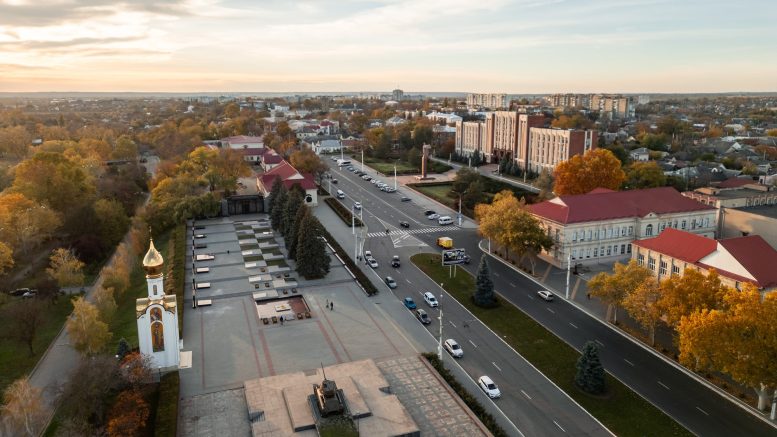
As the Soviet Union collapsed, Transnistria, a narrow strip of land along the Dniester River’s eastern bank, declared independence from Moldova. Despite decades of support from Russia and Ukraine, neither has formally recognized its independence. Only Abkhazia and South Ossetia, themselves unrecognized breakaway territories, have done so.
Lack of international recognition has hindered foreign investment and contributed to economic stagnation. Landlocked and now isolated from Ukraine, Moldova has increasingly found creative methods to reassert its authority through taxation and regulation. Its reassertion of economic control is also eroding the revenue streams available for Transnistria’s separatist administration.
Transnistrian Geography and Demographics
The republic of Transnistria, properly known as The Pridnestrovian Moldavian Republic, is about 120 miles long and between 3 and 20 miles wide. Comparable in size to the US state of Rhode Island, it occupies a narrow strip of gently rolling lowlands loosely defined by Dniester River to the west and the Volhynian-Podolian Upland to the east.
Featuring rich black soil, roughly three quarters of the region’s land is under cultivation. Grains, legumes, and industrial crops such as sunflowers predominate, while potatoes, other root vegetables, and grapes are also economically important.
-

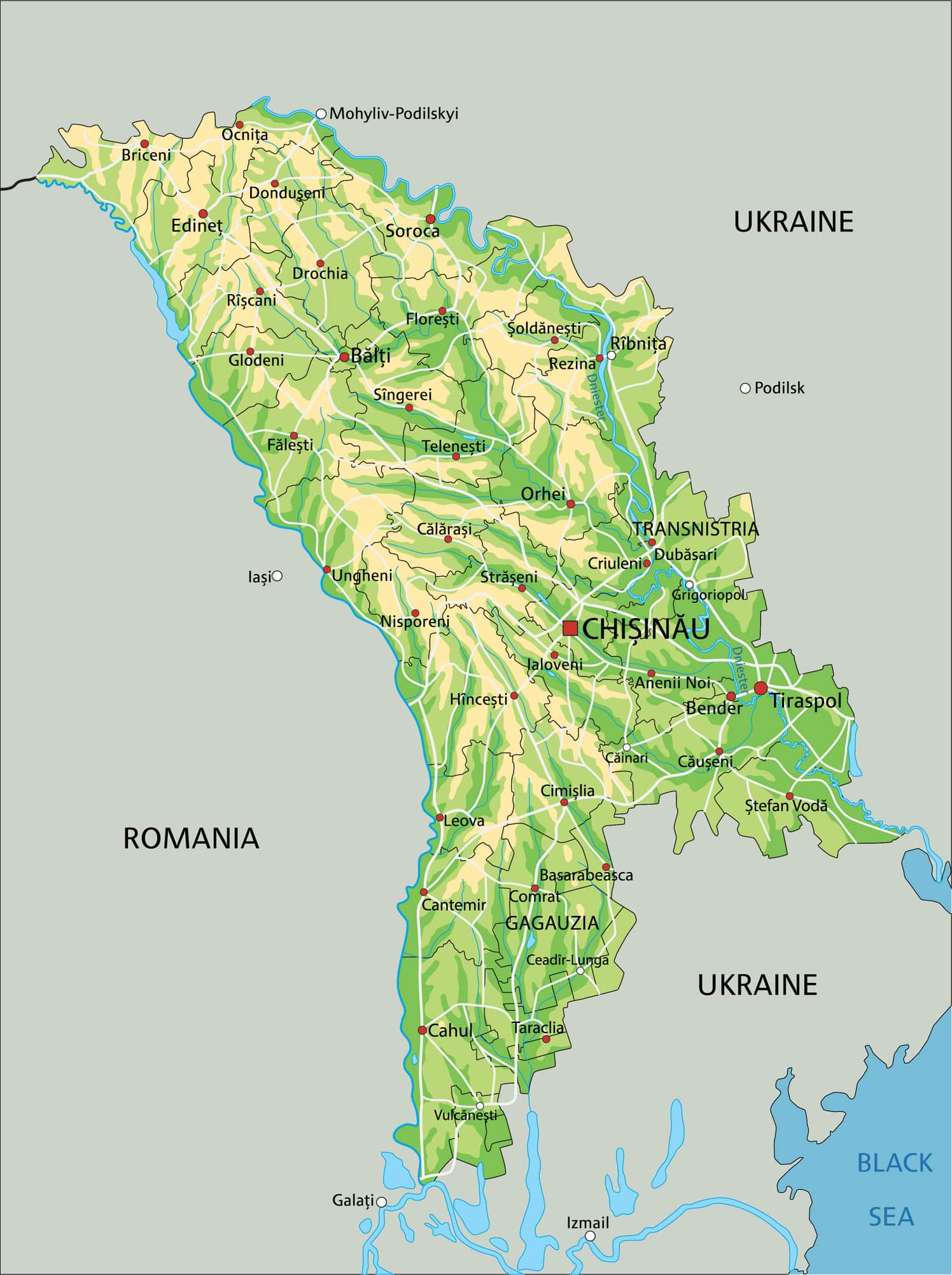
- A topographic map of Moldova. The country, including its breakaway territory, is landlocked and extraordinarily flat.
-

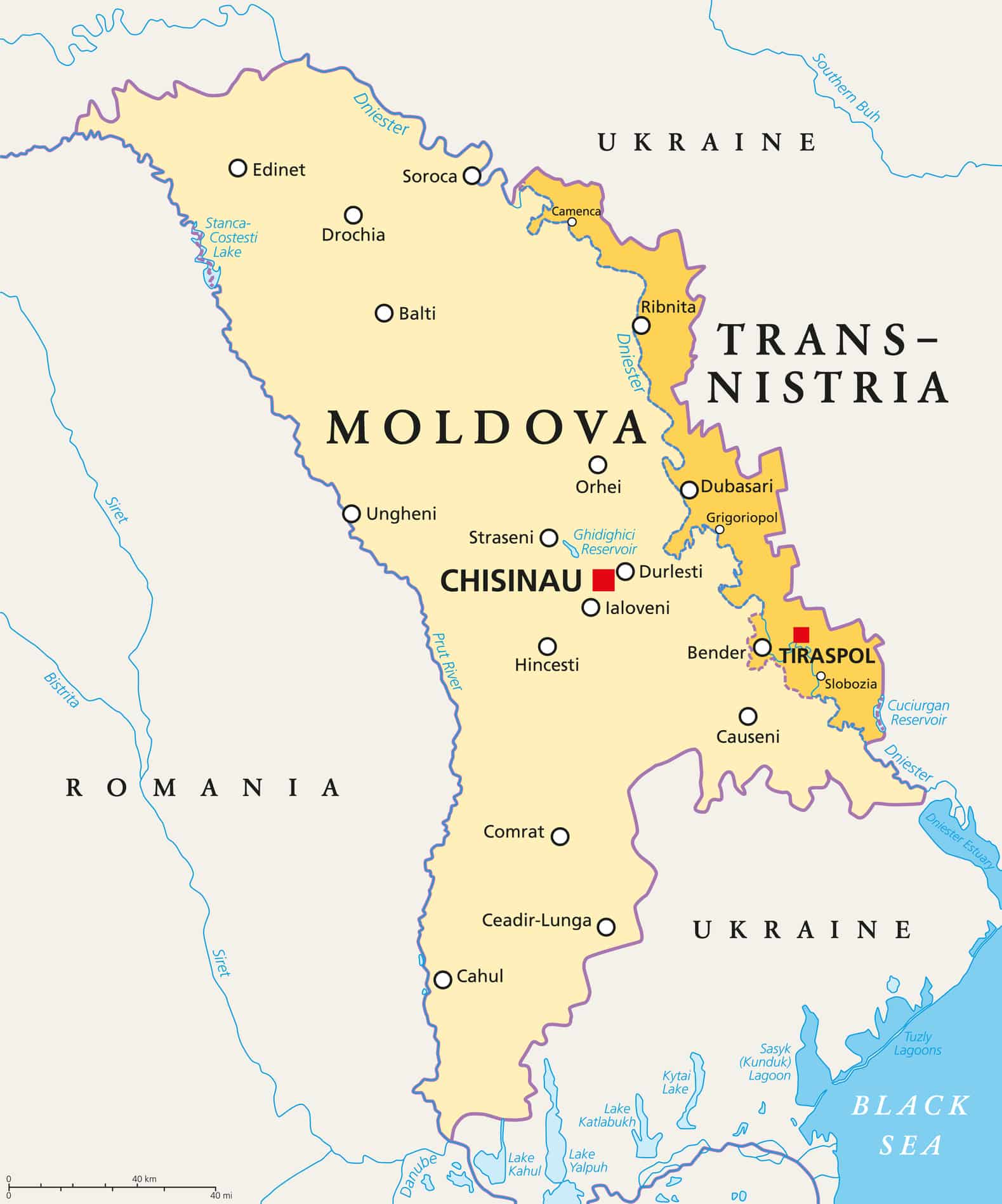
- Moldova with Transnistria and major cities and towns clearly shown.
-

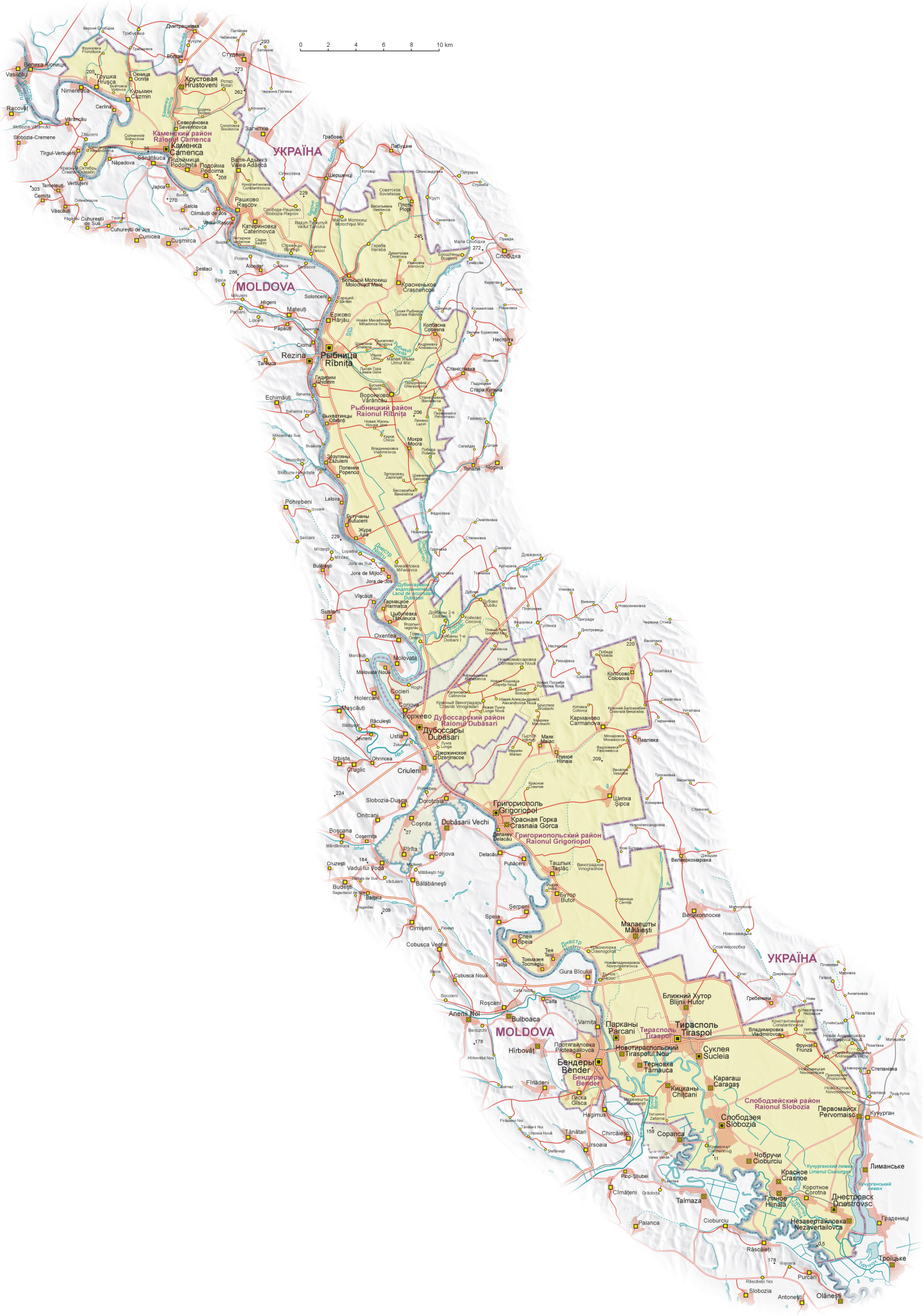
- A detailed map of Transnistria showing its borders, transport routes, population centers, and Moldovan-occupied areas.
Transnistria has no major mineral or hydrocarbon deposits. Its industry has historically depended on imported raw materials and heavily subsidized Russian natural gas. In 2025, however, Ukraine declined to renew its agreement to transit that gas, causing an energy crisis in Transnistria, the effects of which continue to be felt today. Most transport and industrial infrastructure was built under tsarist Russia or the USSR and is today aging but still extensive.
Transnistria’s population has declined steadily, from 680,871 in the 1989 Soviet census to 475,373 in the region’s 2015 census. Moldovan estimates from 2026 put the population at 366,830. Many residents also hold Moldovan, Russian, Romanian, and/or Ukrainian citizenship, all of which many Transnistrians can apply for for through simplified processes. This gives them considerable freedom of movement and opportunities to seek employment abroad as the local economy has deteriorated.
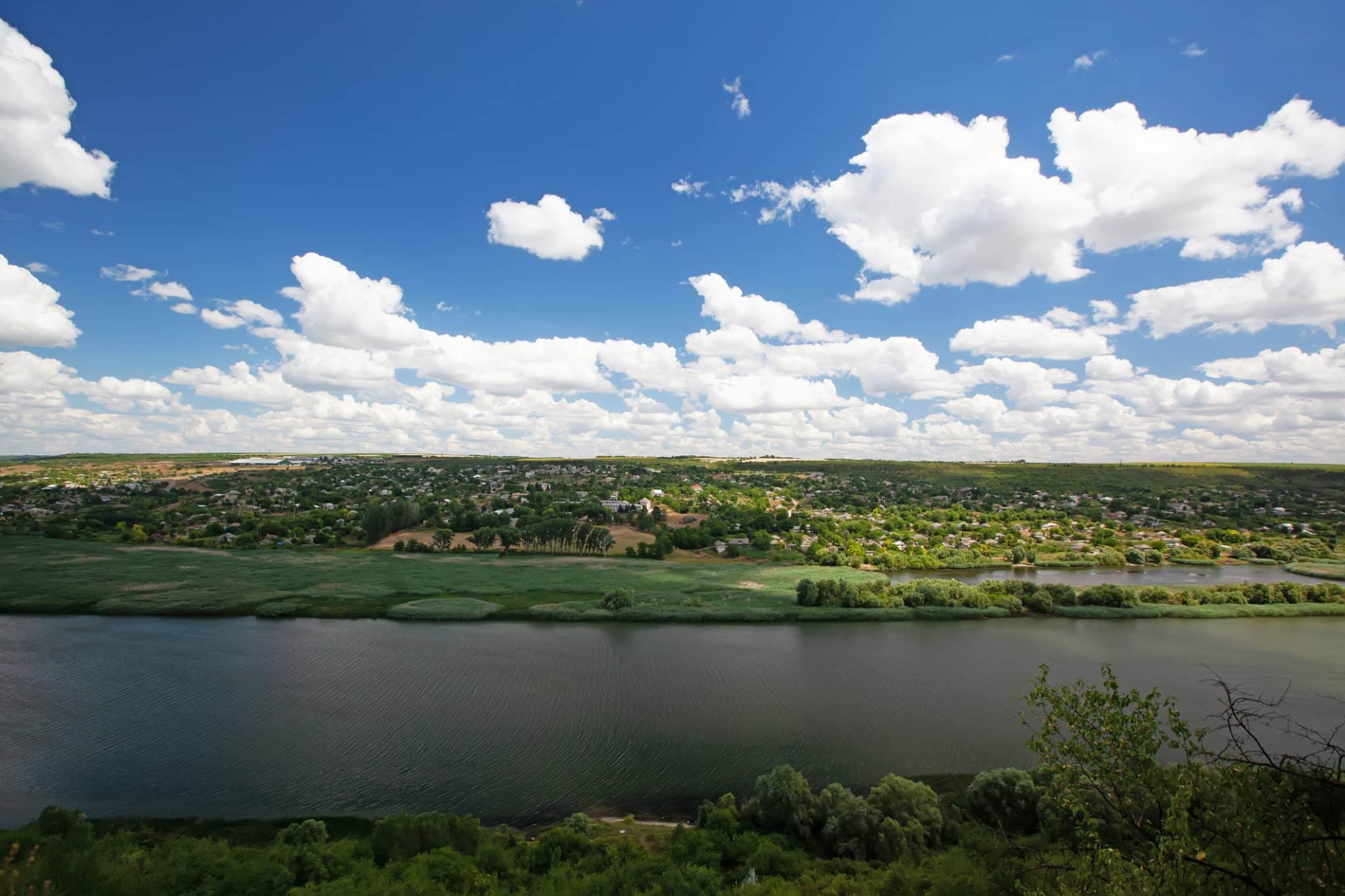
View of the village of Popencu, Transnistria from Moldovan side of the Dniester. Rolling plains define the geography of both sides of the river.
About a third of Transnistria’s population lives in Tiraspol, the capital and by far its largest city at around 130,000 people. Originally established as a Russian imperial garrison town, Tiraspol underwent most of its development during the Soviet period. Its architecture and urban planning still reflect this legacy, with functional concrete apartment blocks and monumental Soviet neoclassical and Stalinist government buildings dominating the skyline.
Other significant cities are all grouped around the Dniester river. They include Bender (population approximately 91,000), with several factories including textiles, food processing, and electronics as well as a major transport hub. Originally an Ottoman border stronghold, Bender retains remnants of its old fortifications. Further north, Rybnitsa (population approximately 47,500) is home to a major steel mill and several other metal working plants.
According to the region’s 2015 census, its population is divided primarily among ethnic Moldovans (29%), Russians (29%), and Ukrainians (23%). Approximately 14% declined to identify their ethnicity. Russian is by far the most widely spoken language and serves as a lingua franca among these groups and other minorities, continuing its role from the Soviet period. More than 90% of the population is Eastern Orthodox Christian, with small Catholic, Protestant, and other religious communities.
Early History: The “Wild Fields” of the Dniester’s East Bank
While the Greeks, Romans, and Ottomans established extensive control over the Black Sea coast, controlling the lands to its north proved far more difficult. Kyivan Rus and later the Polish-Lithuanian Commonwealth also struggled to absorb these inland territories as they expanded south. For centuries, the steppe region remained a contested frontier, rich in agricultural and trade potential but dominated by nomadic peoples who maintained considerable independence through diplomacy and warfare.
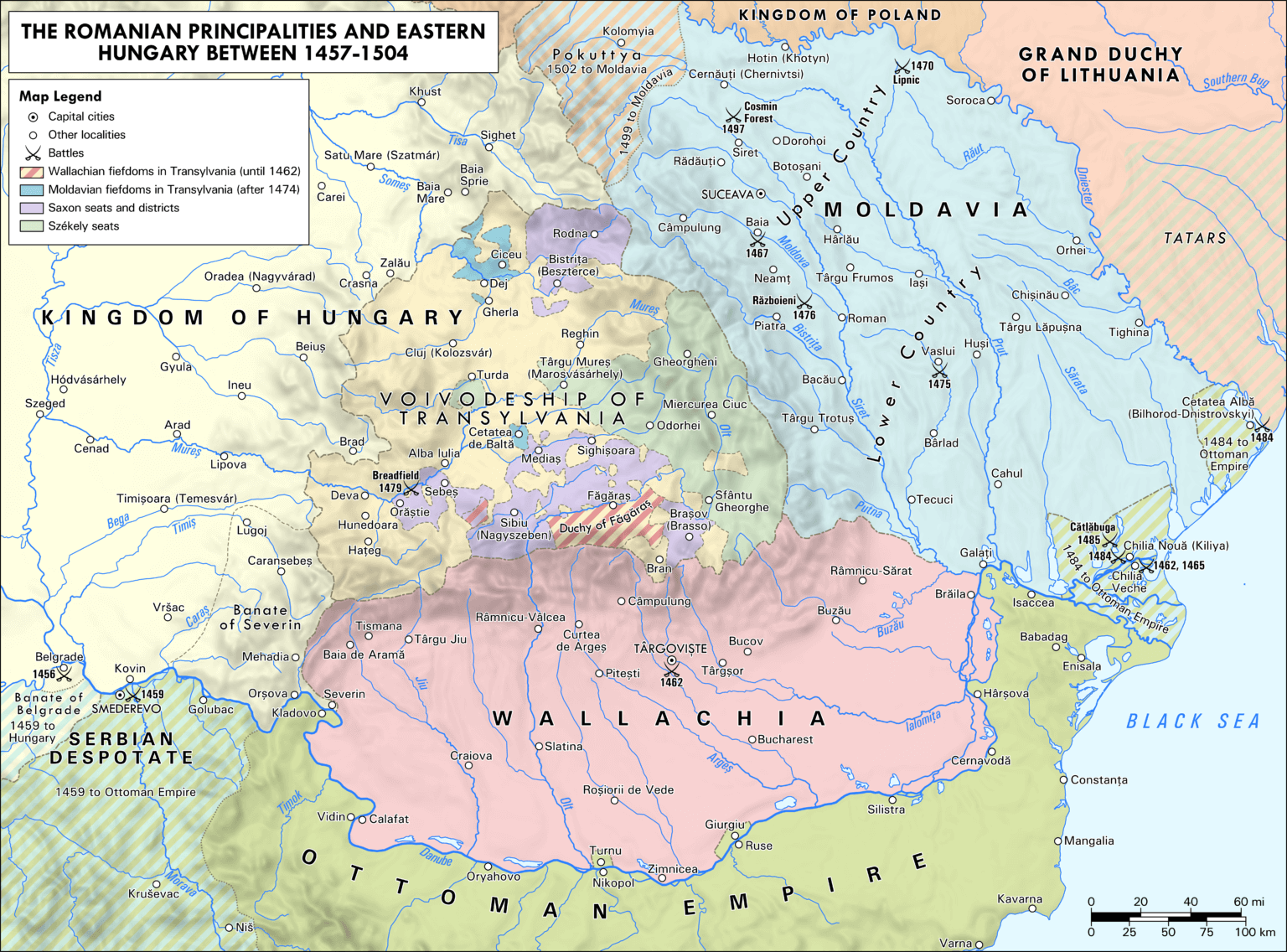
Map of the Romanian principalities, including Moldavia, and eastern Hungary between 1457 and 1504 (Image credit: Andrei Nacu; Creative Commons)
In the 15th and 16th centuries, the Principality of Moldova expanded to the western bank of the Dniester River, with occasional but temporary attempts to push farther east. By the 16th and 17th centuries, the Ottomans had constructed substantial stone fortresses to protect trade routes and control the rivers flowing into the Black Sea. Nevertheless, the Dniester remained an important limit to their direct territorial control of the lands beyond the rivers and coast.
East of the Dniester lay Yedisan, nominally claimed by the Ottoman Empire through its alliances with the Crimean Khanate, but actually controlled by the Nogai Horde, who maintained considerable independence through their shifting relationship with the Ottomans.
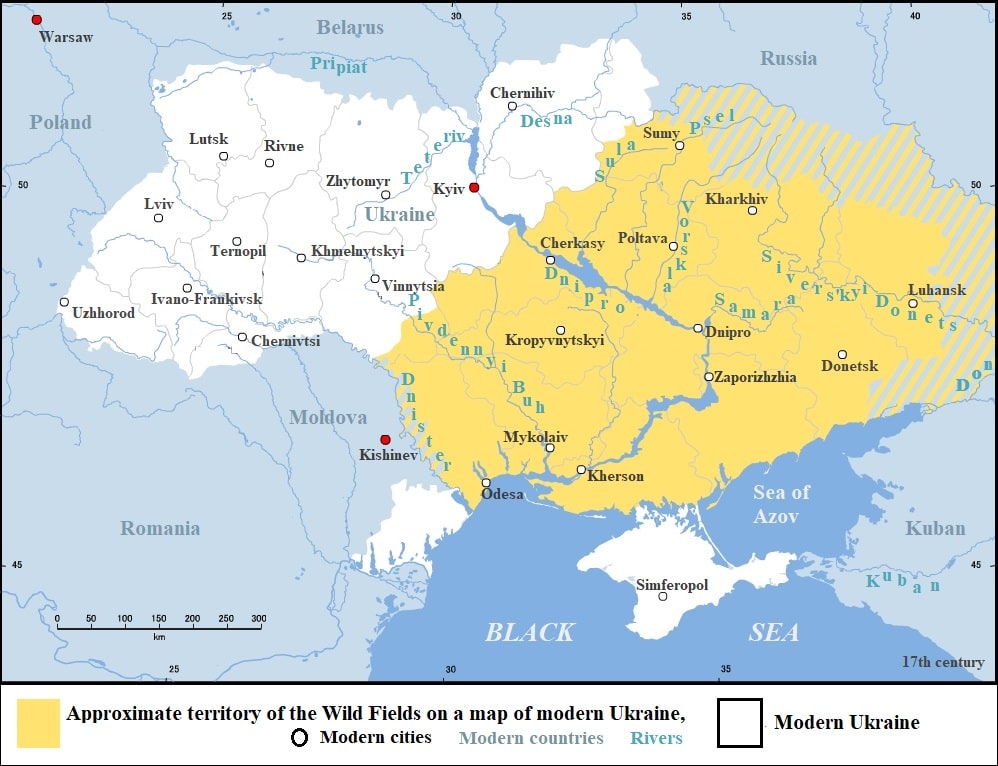
Among Moldovan, Ukrainian, and Polish peasants, the vast steppe east of the Dniester was known as the “Wild Fields.” Beyond the control of settled rulers, the land attracted merchants, herdsmen, and adventurers seeking opportunity as well those fleeing feudal obligations, taxation, and war. They braved the move despite the well-known risk of raids by nomadic groups who saw the new arrivals as sources of plunder and slaves.
The Zaporozhian Cossacks also settled along the northern edge of the Yedisan steppe from the 16th through the 18th centuries. They raided and traded with Nogai communities while gradually expanding southward. Many peasants, including Moldovans, joined the Cossacks in search of protection and opportunity.
By the early 18th century, the lands east of the Dniester had a predominantly rural population of Ukrainians and Poles, alongside growing Moldovan communities. While the former two were Slavic, the latter spoke Romanian and had much in common with Romanian communities along the southwest Black Sea coast.
Throughout the 18th century, Russia militarily expanded control over the region. Under the 1792 Treaty of Jassy, the Ottomans ceded their claims to the territory between the Southern Bug and Dniester rivers. Russia then began systematic settlement and infrastructure development to hold and control the territory. Tiraspol claims 1792 as its founding year, when Russian forces under General Alexander Suvorov planned fortifications at the site. Other towns and military settlements were founded in quick succession.
-

- There were many conceptions of the “wild fields.” This map shows one with modern Ukraine superimposed for reference.
-

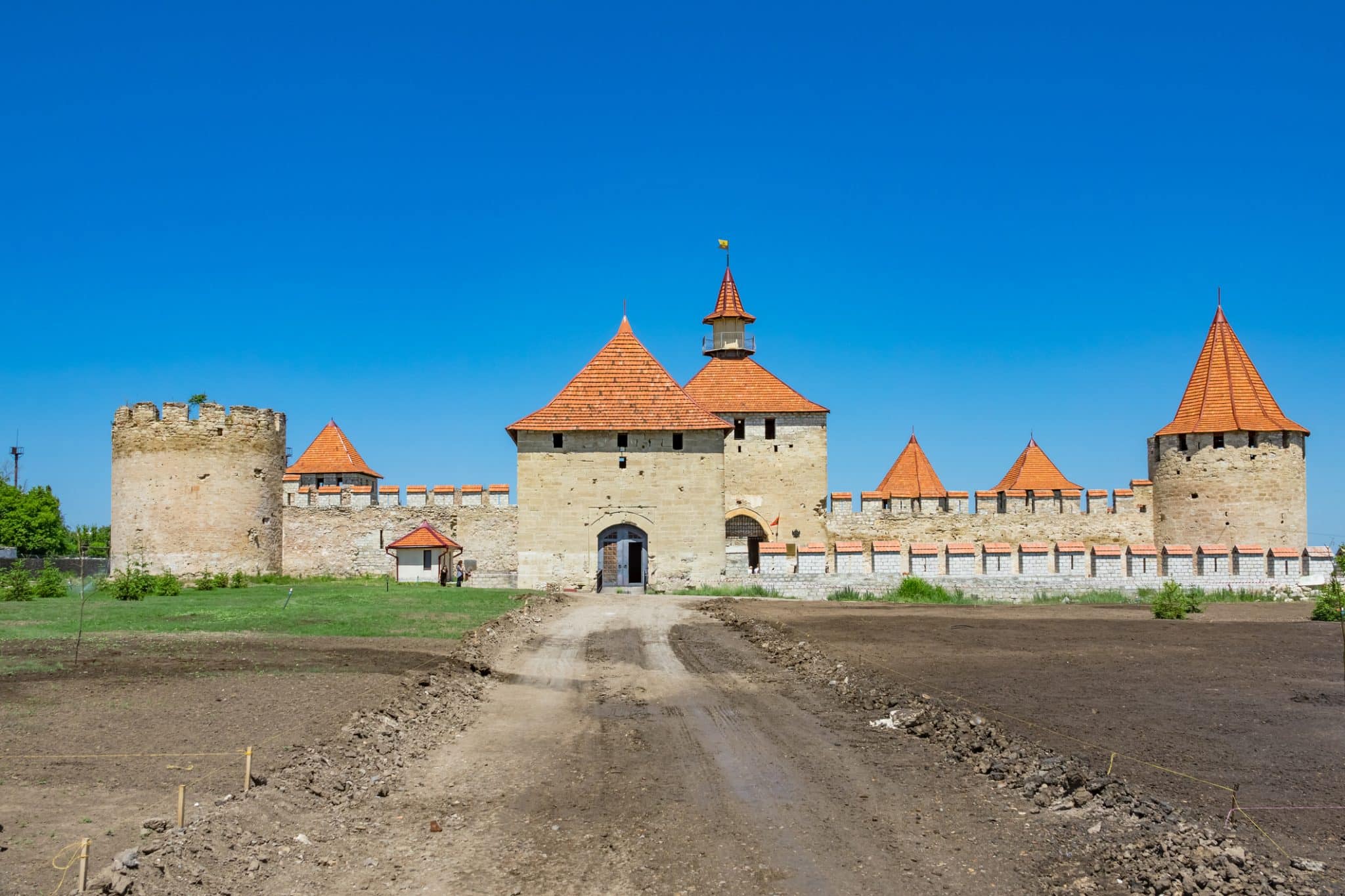
- Bender Fortress, built in the 16th century under Ottoman Sultan Suleiman the Magnificent.
Further north, Russia acquired additional territory, including lands that would become part of northern Transnistria, through the Second Partition of Poland in 1793.
In 1812, Russia annexed the territory between the Dniester and Prut rivers from the Ottoman Empire. Formerly the Principality of Moldova’s eastern portion, Russia named the new province Bessarabia, redistributed land among nobles and incentivized or forced the relocation of peasants to populate and develop the newly acquired territories.
The Russian Empire’s last census, taken in 1897, showed that Russians and Ukrainians together outnumbered Moldovans in most towns east of the Dniester and constituted substantial minorities in most rural communities as well.
The Soviet Era and the Rise of Separatism
As the Russian Empire collapsed, Bessarabia joined Romania. The Bolsheviks supported rebellions and briefly invaded in unsuccessful attempts to reclaim the territory.
In 1924, the Soviets established the Moldavian Autonomous Soviet Socialist Republic (ASSR), east of the Dniester, within the Ukrainian SSR. The new republic, ethnically 30% Moldovan and 49% Ukrainian, was a top-down creation that largely served as a propaganda base to advance Soviet claims to Bessarabia and to engineer a new Moldovan identity.
Moldovan, Russian, and Ukrainian were declared official languages. Moldovan was presented as distinct from Romanian, with a new Cyrillic alphabet and orthography. Soviet history books portrayed Moldovan peasants as a separate ethnicity that was exploited by Romanian nobles.
In 1940, the USSR forced Romania to surrender Bessarabia under threat of military invasion. The Moldavian ASSR was then divided, with Ukraine absorbing most of it and several western districts combined with Bessarabia to form the new Moldavian SSR. For the first time, a single Moldavian administrative unit encompassed territory on both sides of the Dniester.
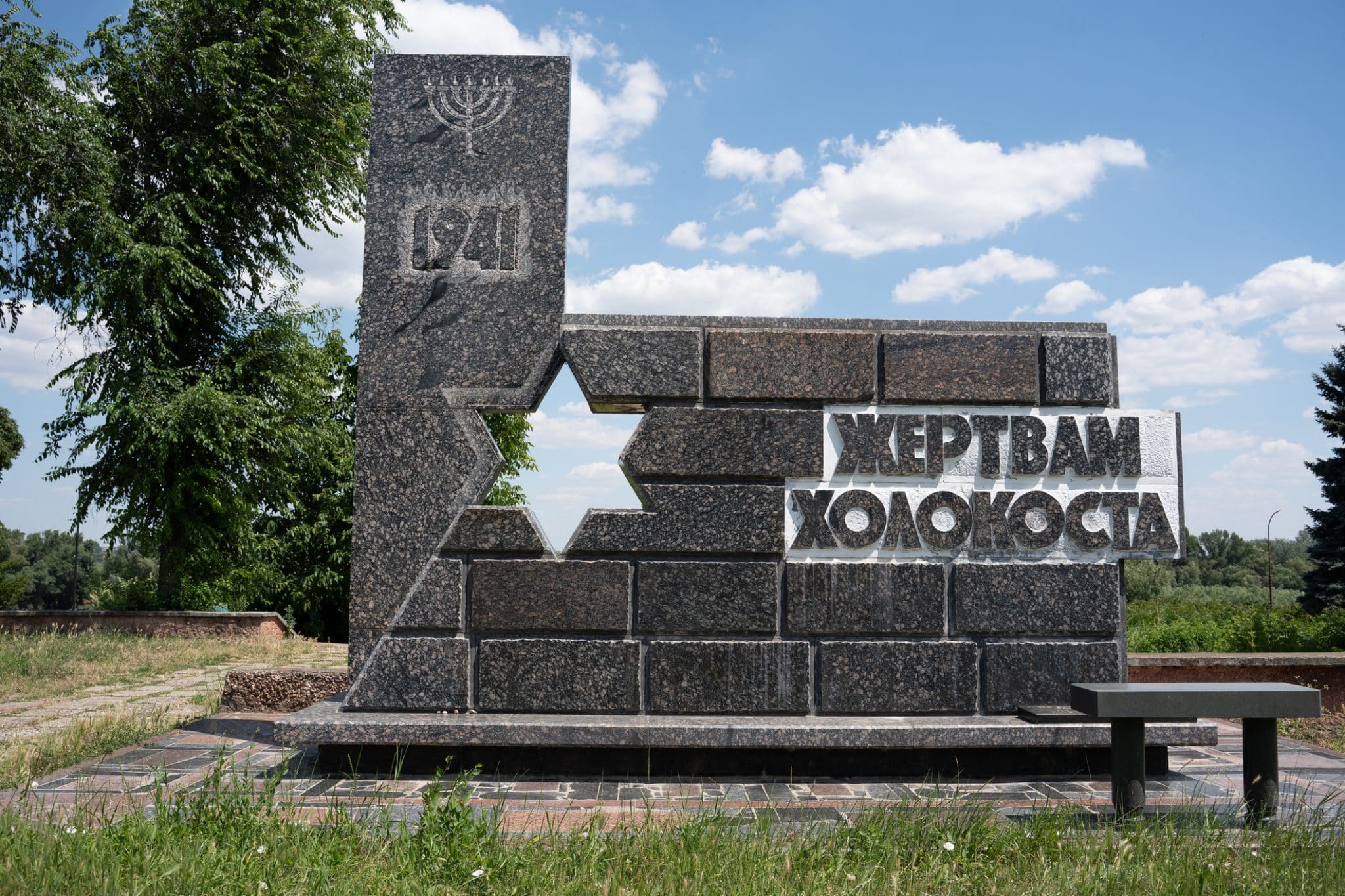
Memorial to Jewish Holocaust victims in Bender. The monument was erected in 2003 by the Jewish community of Bender.
In 1941, Romania joined Nazi Germany in its invasion of the Soviet Union. Romanian forces, supported by Germany, occupied Bessarabia and much of southwestern Ukraine, establishing the Transnistria Governorate from lands east of the Dniester. Under Romanian administration, schools reverted to Romanian in Latin script, Soviet-closed churches reopened, and cultural institutions promoted Romanian heritage.
The Romanian authorities also followed Nazi policies, establishing concentration camps, ghettos, and “colonies” in Transnistria for Jews, Roma, communists, and other minorities. Of the half million Jews native to or deported to the governorate, some 55,000 remained at the war’s end.
Soviet forces retook the territory in 1944 and reestablished the Moldavian SSR, restoring Soviet linguistic, educational, and cultural policies. The Soviets also carried out mass deportations and executions, targeting former Romanian officials, landowners, wealthier peasants, religious activists, and suspected anti-communists. Many were forcibly sent to Siberia and Central Asia.
Untrusting of the local Moldovan population, Moscow shaped the republic to limit its autonomy. Black Sea coastal territories were assigned to Ukraine, leaving the Moldavian SSR landlocked. Industrial investment was concentrated east of the Dniester, supported by the settlement of Russian and Ukrainian workers. By 1989, the relatively small territory accounted for approximately 40% of the Moldavian SSR’s GDP and 90% of its electricity production. Russians and Ukrainians also dominated regional leadership positions and together formed a majority of the population east of the Dniester.
A short documentary by SRAS Graduate Miles Atkinson created in 2012.
Under Perestroika, Moldovans gained greater political influence. In 1989, the republic’s legislature made Moldovan the state language and restored the Latin alphabet. Russian retained an official status as a language of “interethnic communication,” but many Russian-speakers, particularly those in the industrial centers east of the Dniester, feared the new language policies would hinder their job prospects and political representation. Protests and factory strikes spread through Tiraspol, Bender, and Rîbnița, disrupting production and closing bridges across the river.
The United Council of Labor Collectives (OSTK) was founded in Tiraspol in 1989 to coordinate the resistance. Framing developments in Chișinău as “fascism,” the OSTK swept local elections in 1989 and, in 1990, declared the Pridnestrovian Moldavian Soviet Socialist Republic as an autonomous unit within the USSR. Both Moscow and Chișinău rejected the declaration as illegal, but Tiraspol continued to assert independence from Moldova.
The Transnistrian War
In 1991, two rival governments operated within Transnistria, with local institutions divided in their loyalties. Separatist forces had to seize control of many institutions one building at a time.
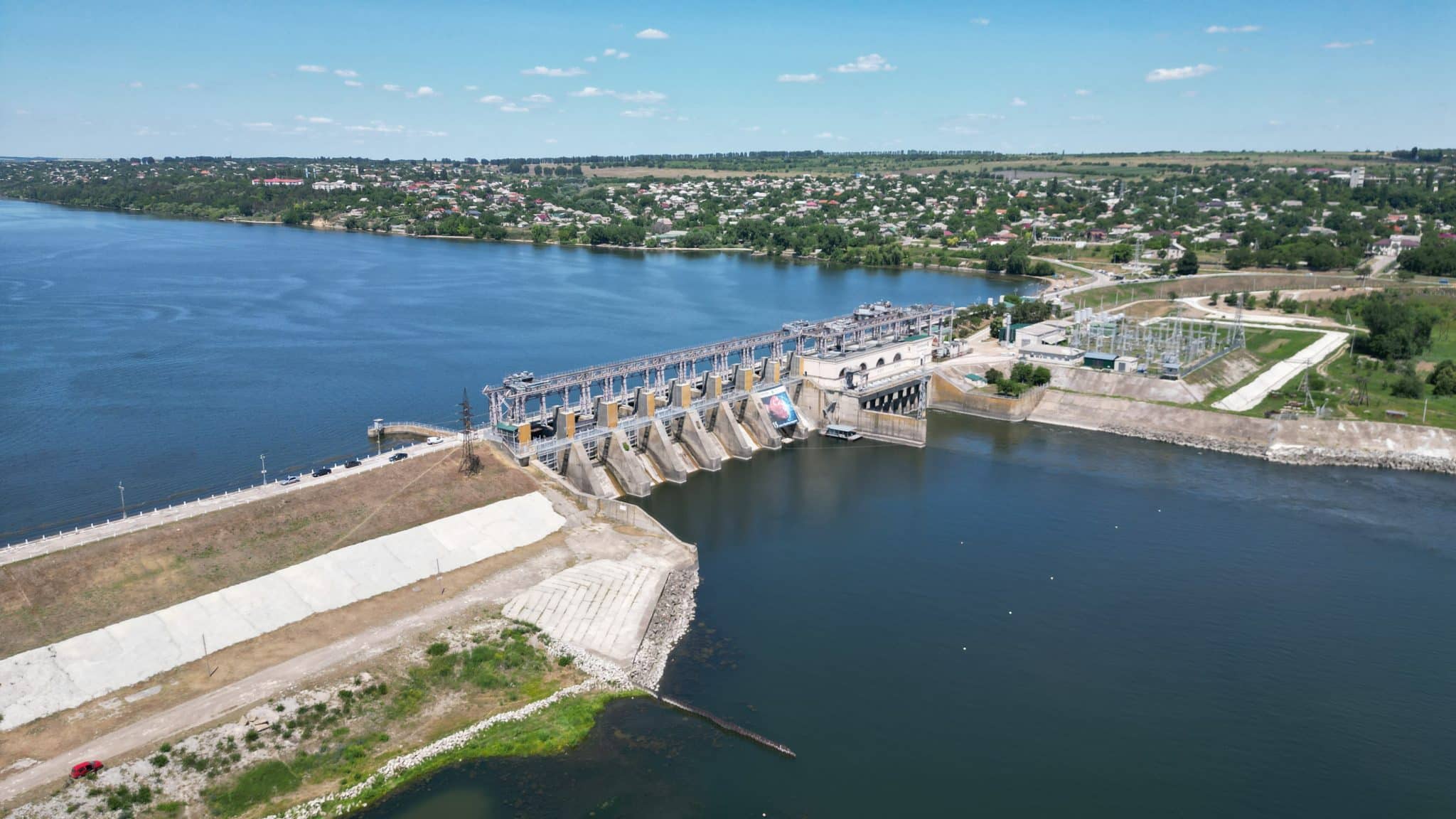
The Dubăsari Hydroelectric Power Station and the town of Dubăsari beyond.
Dubăsari, a town of some 35,000, played a large role in the coming conflict. Its administration and police force remained loyal to the Moldovan government. Its nearby major river crossing and central location would also mean that its capture would effectively split Transnistria in half.
In November 1990, Moldovan police attempted to cross the barricaded bridge to Dubăsari. In the fighting that broke out, three separatists were killed before Moldova retreated.
In August 1991, Moldovan special forces arrested Igor Smirnov, one of OSTK’s top leaders, during a diplomatic visit to Kyiv to seek recognition and support. Transnistria responded with a railway blockade that largely severed economic ties between Moscow and Chișinău. Moscow negotiated Smirnov’s release, with both sides agreeing to pursue a peaceful settlement.
Fighting continued, however, and on March 1, 1992, separatist forces made a repeated attack on Dubăsari’s pro-Moldovan police station. Several officers withdrew to the nearby village of Cocieri, where reinforcements crossed the frozen Dniester to reach them. Heavy fighting spread and culminated in June of 1992, when Moldovan forces attempted to retake Bender.
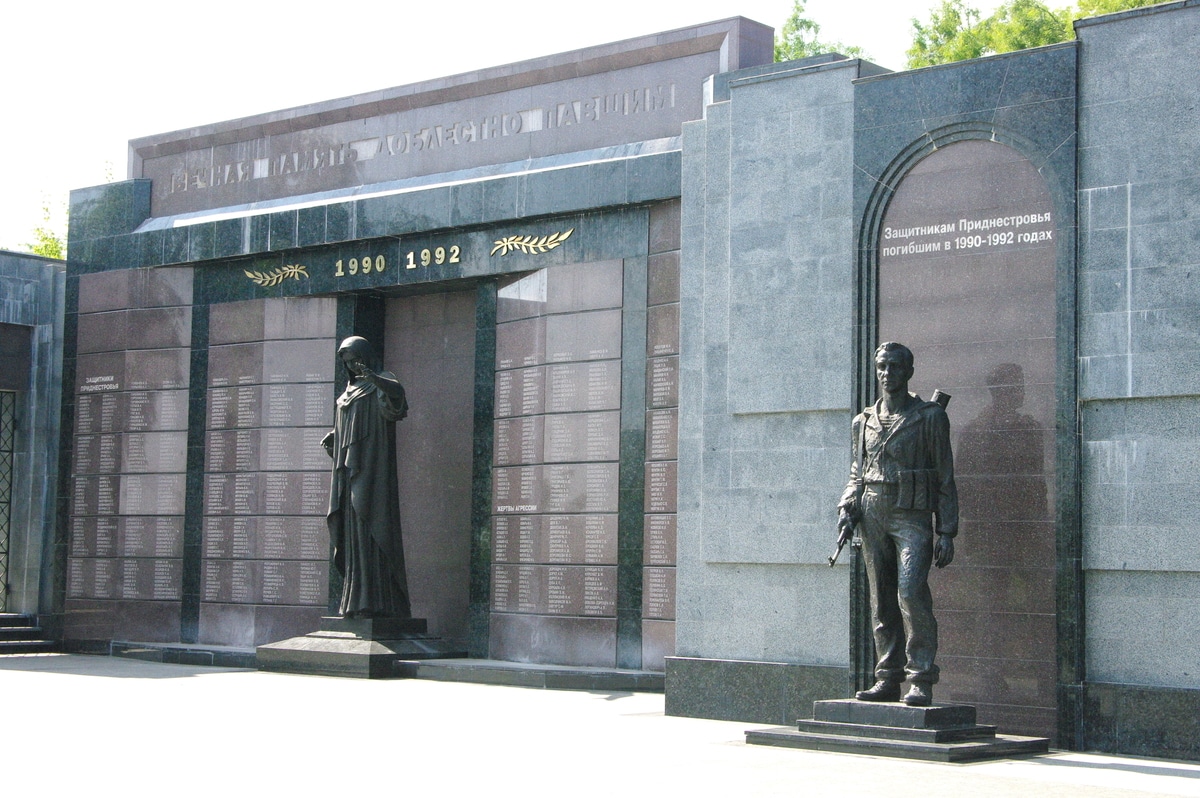
Monument in Tiraspol to Transnistria’s War for Independence against the central government of Moldova. (Image credit: Jardar Seim; Creative Commons)
Forces on both sides were poorly organized, assembled largely in the preceding year. Moldova relied on police, conscripts, and local volunteers and received arms transfers from Romania. Transnistria relied on volunteers supported by Cossack units and personnel and equipment from the 14th Soviet Army. Headquartered in Tiraspol, many of the army’s officers and soldiers sympathized with and allowed weapons and personnel to reach the separatists.
In the Battle of Bender, the 14th Army, in part believing that their garrison in that city was being threatened, sent tanks and artillery against the Moldovans. They retreated and reinforcements amassed in a nearby forest, but were hit by a massive artillery strike, likely authorized by the Russian army. Moldova’s offensive was shattered and it was forced to sign a ceasefire on July 21, 1992.
Analysts have pointed to Moscow’s desire to maintain a presence in the Black Sea region and in preventing Moldova from rejoining Romania to explain its actions.
The Rise of Transnistria’s Politics and Economics
Transnistria moved quickly to establish state institutions. By the end of 1991, it had adopted a constitution, elected a president and legislature, and held a referendum supporting continued separation from Moldova. This all occurred without outside observers, before the conflict ended, and while separatist authorities still lacked full control over the region’s institutions.
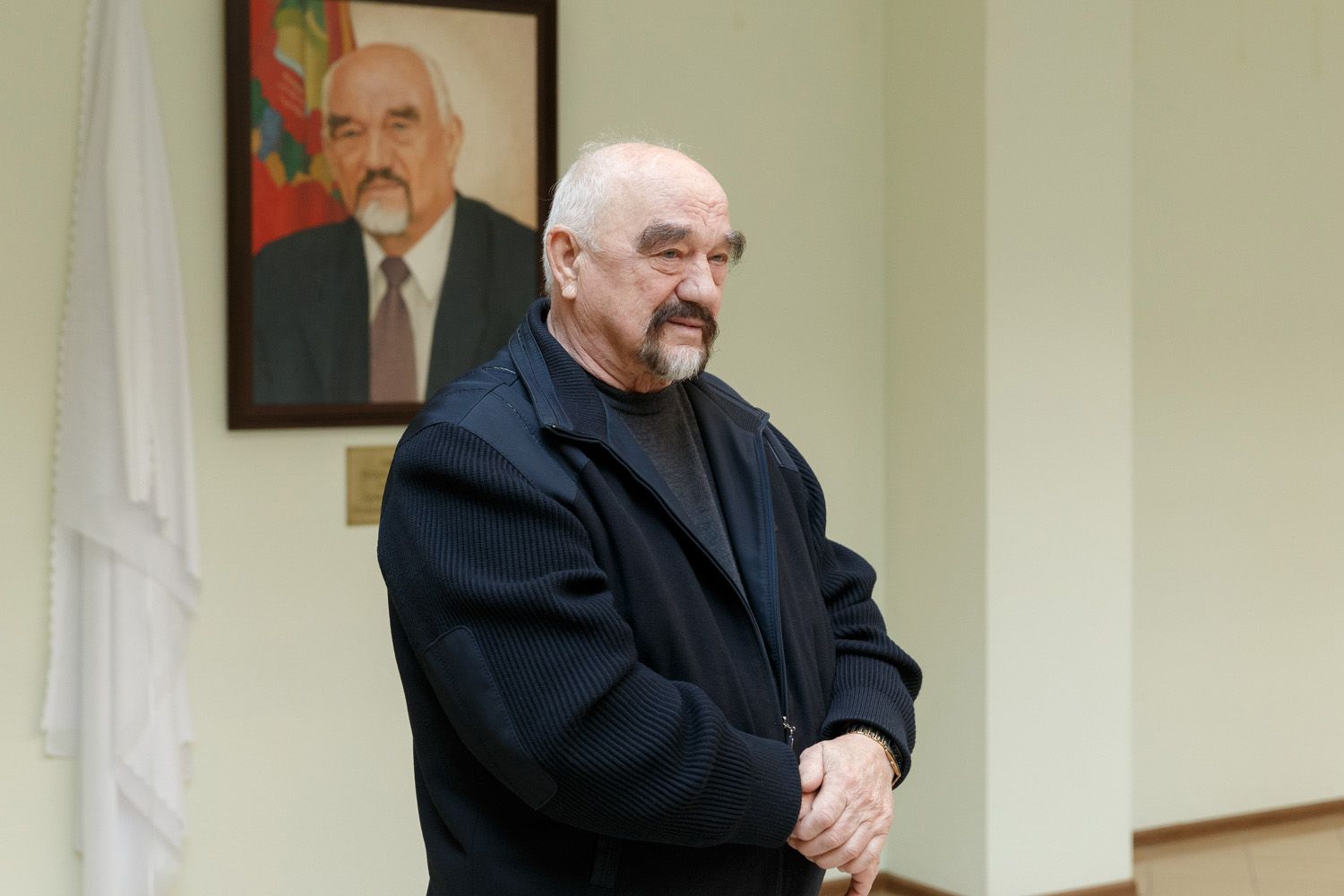
Igor Smirnov, the OSTK leader who had been recently arrested by Moldova, became president and remained in power until 2011. Elected as an independent, he built a highly personalist administration without a political party and increasingly consolidated authority in the presidency. Smirnov’s sons, meanwhile, held senior positions in customs and Gazprombank’s local branch.
Low energy costs and taxes helped sustain the region’s industries in steel, textile, machinery, and more. Lax regulation and corruption allowed these products to reach Europe via Ukrainian railways and ports. The porous border also facilitated duty-free reexports and smuggling of fuel, alcohol, and cigarettes. Rights organizations reported trafficking in people and weapons.
-
- Igor Smirnov dominated Transnistrian politics for nearly twenty years.
-

- A Sheriff supermarket in Tiraspol’s city center.
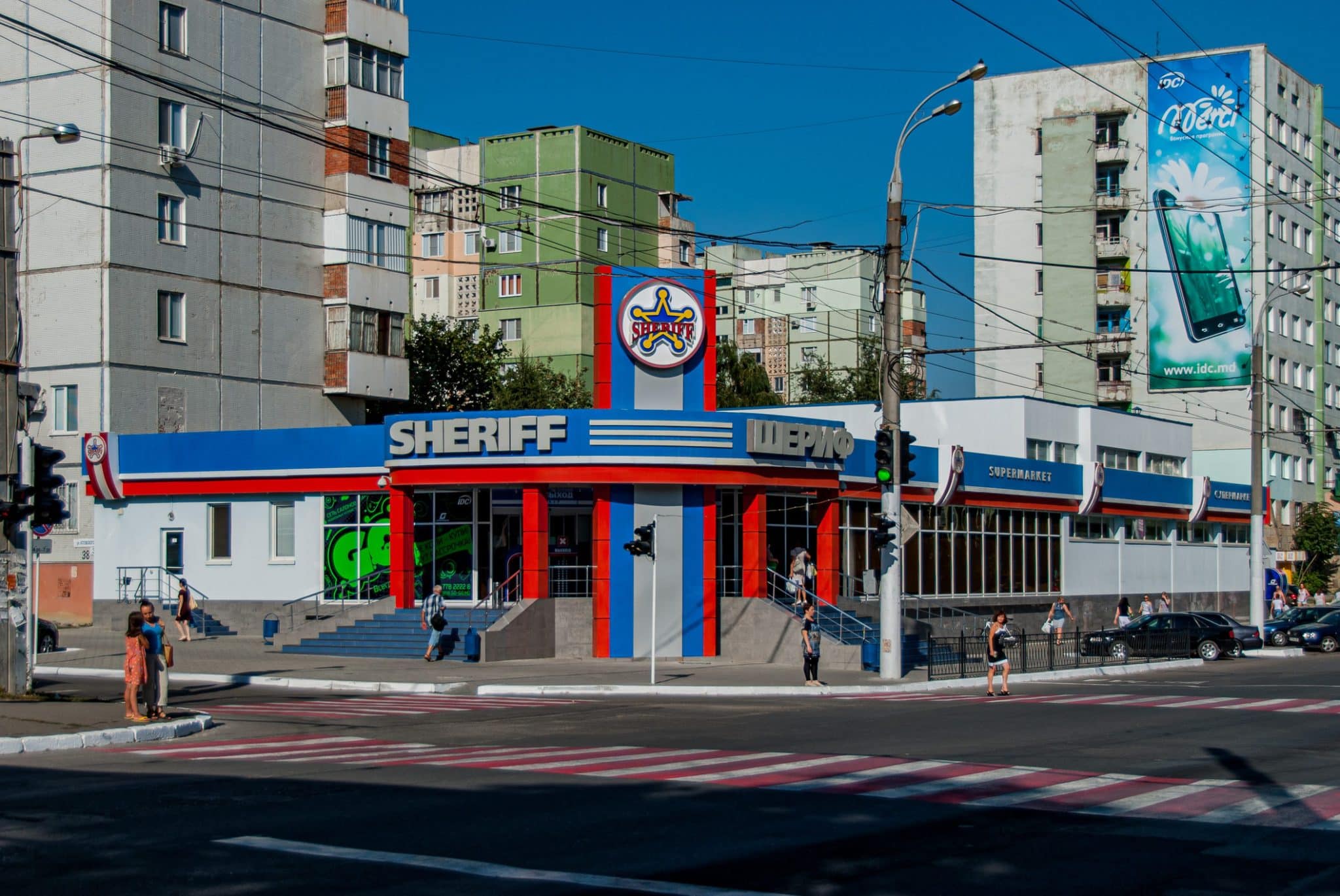
A handful of monopolistic businesses rose, with Sheriff the most notable. Founded by former KGB officers, the company acquired the region’s formerly state-owned supermarkets and a bank. Benefiting from tax concessions and state support, it soon expanded into fuel, manufacturing, media, alcohol, construction, sports, and telecommunications. Today, it controls as much as 90% of some sectors and accounts for nearly a fifth of all tax revenues.
The 2003 Kozak Memorandum represented one of the most serious attempts at reunification. Negotiated by Russian politician, Dmitri Kozak, it was considered by and debated internationally but ultimately rejected by Moldova as it would have allowed Russian peacekeepers to be stationed in Transnistria until 2020 and would have given Transnistria 35% of the legislature’s seats and the ability to block constructional changes, despite having only 14% of the total population of the reunited country.
Foundations of Moldova’s Reintegration Strategy
In 2005, Moldova adopted a “jurisdiction-first” strategy to reintegrate Transnistria through gradual economic, legal, and social integration rather than waiting for a political settlement. It simplified citizenship applications and waived fees for most residents, allowing them to obtain Moldovan passports, work abroad legally, and hold foreign income and investments subject to Moldovan tax obligations.
In March 2006, under a joint customs protocol with Ukraine, Ukrainian authorities agreed to reject shipments lacking Moldovan-approved customs documents and certificates of origin. Since Ukraine and Moldova were Transnistria’s only transit routes for imports and exports, the measure pressured Transnistrian businesses to register with Moldova’s authorities.
To further encourage compliance, Moldova streamlined the registration process and largely exempted registered Transnistrian trade from customs duties, VAT, and excise taxes. Registered businesses also gained access to international trade agreements, including Moldova’s WTO membership and later EU trade preferences, initially with few additional obligations.
Together, these measures extended Moldova’s legal and economic oversight to Transnistrian residents and businesses without requiring agreement from Transnistria’s de facto government.
Diplomacy was also enlarged in 2005, with the US and EU joining the group of mediators that already included Russia, Ukraine, and the OSCE as of 1997. Talks were stalled again in 2006 and did not restart until 2012.
Sheriff, Renewal, and Russian Alignment
By 2011, Smirnov had lost the support of much of the political and economic establishment he had built. Russia was frustrated by stalled talks with Moldova and Transnistria’s gas debt, which by then amounted to some $3.5 billion dollars. Sheriff and other business interests wanted economic liberalization, investment, and predictable governance, while public dissatisfaction with corruption and economic mismanagement grew.
When Smirnov sought a fifth term, Russia backed his rival, Anatoliy Kaminski, who was nominated by the Sheriff-funded Renewal Party. In a surprise upset, however, Yevgeny Shevchuk won. A former parliament speaker and Renewal leader, Shevchuk ran as an independent on an anti-establishment platform promising better governance, reduced corruption, economic reform, and improved relations with Chișinău.

A campaign poster from Yevgeny Shevchuk’s presidential race. It features his name and the slogan “There Will Be Order!” in Russian.
Shevchuk reopened negotiations with Moldova, easing trade restrictions on Moldovan goods and restoring freight rail links. He also pursued agreements to expand cooperation in commerce, banking, telecommunications, and transportation.
Domestically, Shevchuk sought to consolidate power and fund reforms through measures such as higher gas tariffs for industry. He also instituted exchange-rate controls and price caps on many goods. While popular with the public, these policies increasingly alienated Sheriff, the Renewal Party and the parliament it controlled, leaving Shevchuk without the legislative support needed to continue his agenda.
In 2016, Renewal-backed Vadim Krasnoselsky, a former Sheriff security chief and sitting parliamentary speaker, defeated Shevchuk, restoring the established political-economic bloc to power. Shevchuk left the region and was later convicted in absentia in 2018 on corruption and abuse-of-office charges, receiving a 16-year sentence. He remains in exile in St. Petersburg.
Since taking office, Krasnoselsky has maintained close economic ties with Moldova and the EU while reversing most of Shevchuk’s economic policies in favor of lower taxes and gas prices. With Sheriff’s backing, his administration has funded urban renewal, sports facilities, and cultural initiatives. Structural reform, meanwhile, has stalled, wages have stagnated, and pensions have declined.
Krasnoselsky has also systematically pursued a policy first introduced by Shevchuk of aligning Transnistrian laws and policies with Russian legislation. This includes everything from criminal codes to school curricula as well as introducing restrictions on NGOs and LGBTQ rights that mirror well-known laws in Russia. Krasnoselsky also opened an official representative office in Moscow in 2019 to coordinate diplomacy. Although neither side has openly declared annexation a future goal, Transnistria’s growing legal divergence from Moldova and the EU has fueled protests from Moldovan leaders, who have openly condemned Krasnoselsky’s policies.
Transnistria Since 2022: Reintegration Through Taxation?
The start of the war in Ukraine in February 2022 dramatically changed Transnistria’s strategic and economic environment.
Citing the 1,400–1,500 Russian troops as a security threat, Ukraine closed its border with the region. Although Transnistria’s leadership repeatedly insisted the troops would not leave its territory, Ukraine also destroyed a railway to Transnistria in March. Russian military leaders stated in April that control of southern Ukraine would establish a landbridge to Transnistria, heightening fears that Russia could use the troops and might have designs on the territory.
With connections to Ukraine cut, Moldova became Transnistria’s only access to international markets.
In January 2024, Moldova ended its arrangement allowing Transnistrian businesses to pay customs duties to local authorities rather than Moldova. The expected change had been legislated in 2021.
Calling the new arrangement “double taxation,” Transnistria formally appealed to Russia for protection from what it called Moldova’s economic pressure. Moscow responded cautiously, issuing a statement that it would consider the appeal and prioritize protecting Transnistria’s interests. However, Russia neither recognized nor annexed the region as some feared it might.
In December, Ukraine announced it would no longer allow Russian gas to transit its territory. Thus, the gas supply on which much of the Transnistrian political and economic systems were built, was turned off on January 1, 2025. Industrial production halted, and households lost heating, hot water, and gas during winter. Moldova was affected as well, having historically relied on the Russian-gas-powered Cuciurgan power plant, located in Transnistria for as much as 80% of its electricity.
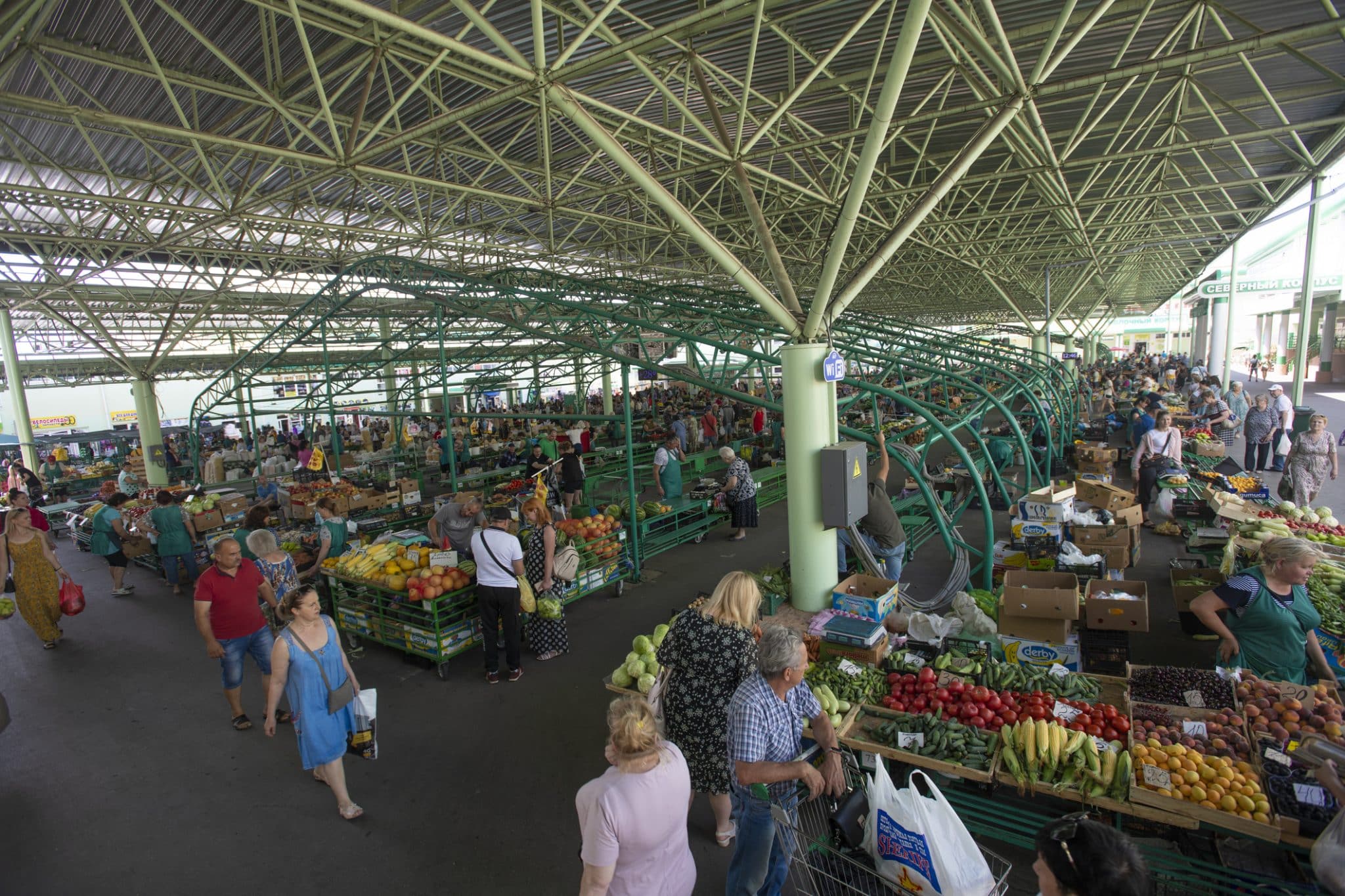
The Green Market in Tiraspol is largely unchanged since Soviet times.
Moldova and the EU intervened to restore supplies, initially financing emergency gas purchases. Transnistria subsequently arranged Russian financing to purchase gas through Hungary, but supplies have remained insufficient to fully restore industrial production. Regardless of funding, gas deliveries now depend on access to Moldovan infrastructure.
Moldova has also begun extending its fiscal and regulatory authority into the region, introducing VAT and excise duties on selected imports in September 2026, with further taxes to be phased in through 2030. Moldova will also require businesses to receive Moldovan environmental permits, which will require physical inspections by Moldovan officials and thus extend its oversight into Transnistrian territory.
Russia has pledged to finance gas purchases through 2027, excluding supplies for the Cuciurgan power plant. However, Transnistria’s dependence on Moldova for access to European markets is increasingly difficult to avoid. As of 2024, the EU accounted for 83% of its exports and 54% of imports, all moving through Moldova.
Moldova is increasingly positioned to use its economic leverage to expand taxation and regulatory oversight while reducing revenue flows to Transnistria’s separatist administration. Politically, however, Transnistria remains committed to separation from Moldova and alignment with Russia.
Transnistria Today
Transnistria is increasingly dependent on Moldova and the EU for economic survival and Russia for political autonomy. These dependencies, however, are increasingly at odds and may prove unsustainable over the long term.
As of 2026, Transnistria’s accumulated Russian gas debt was estimated at $11.1 billion, raising questions about how long Moscow can continue subsidizing the region. Meanwhile, Transnistria’s systematic alignment with Russian law further distances it from Moldova and the EU. With its separatist status and Russian military presence, its legislation adds a growing potential complication to Moldova’s EU accession.
The “5+2” negotiations have been suspended since the start of the war in Ukraine, while bilateral “1+1” talks between Chișinău and Tiraspol continue intermittently without meaningful progress. Meanwhile, both sides have increasingly sought to pressure the other.
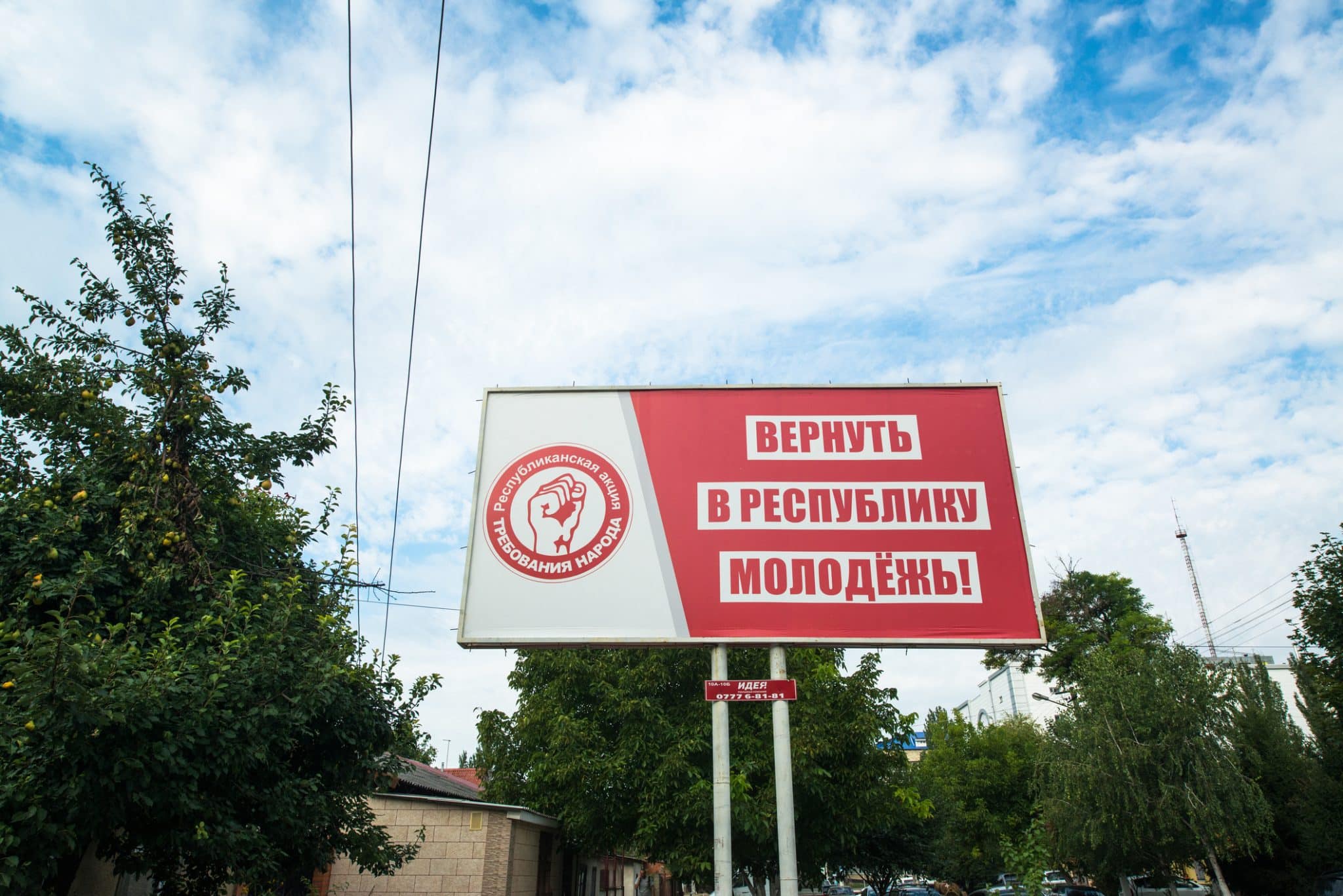
A Russian-language billboard in Tiraspol states the people demand that young people be returned to the republic. A large percentage of Transnistrians live and work abroad.
The OSCE remains the only international organization with a continuous presence on both sides of the Dniester, monitoring the conflict, facilitating negotiations, and reporting on developments. A separate joint peacekeeping force of Russian, Moldovan, and Transnistrian contingents patrols the declared security zone.
Domestically, Krasnoselsky is approaching the end of his second and final constitutional term ahead of the December 2026 presidential election. However, tightly controlled elections, excluded opposition candidates, and media dominated by state outlets, Russian broadcasts, and Sheriff-affiliated outlets make an outsider victory unlikely.
Emigration may be Transnistria’s most consequential response to its deteriorating conditions. Statistics reported by Moldova estimated that roughly one-third of Transnistrian residents were living or working abroad by 2017, and the economic crisis following the loss of Russian gas supplies is unlikely to have reversed that trend. While Transnistrian authorities have published no direct demographic figures on emigration, its Ministry of Education recently showed that the number of school-aged children in the region fell by nearly 4,000 (about 6%) between 2025 and 2026, suggesting continued demographic decline and family emigration.
Thus, it seems Transnistria’s citizens are most likely to vote with their feet. Transnistria’s leadership faces the challenge of sustaining its economy, financing the state, and reversing demographic decline. Without international recognition, however, its prospects for long-term economic viability and independence remain limited.
