


Russia today is more politically, legally, and fiscally centralized than perhaps at any point in its history. At the same time, Russia remains complex, diverse, and relevant. Russia’s immense borders encompass, for example, scores of indigenous ethnic groups, an array of regional economies, abundant natural resources, and at least two broad geographic areas of international conflict and competition.
To provide a broad overview of contemporary Russia, the resource below examines the country’s administrative and geographical divisions. It briefly highlights the historical origins of Russia’s federal structure, the economic and demographic character of its regions, and the ways geography continues to shape politics, culture, and daily life across the federation.
Russian Regions: Semantics and Reality
As the United States is divided into 50 states, Russian Federation claims 89 federal subjects (субъекты федерации), which are often collectively referred to as “regions” (регионы). Interestingly, Russia’s claimed territory is about 1.9 times larger than that of the US, while it has roughly 1.8 times as many top-level administrative divisions, making the two systems broadly proportionate in geographic scale.
There are, however, significant differences in the structures of the two systems including naming traditions, ethnic legal structures, and budgetary relations with the federal center.
Legal and Budgetary Status of Russia’s Regions
Under the Russian Constitution, all federal subjects are formally equal before the federal government. Each has its own founding document—either a “constitution” or a “charter,” though the distinction between these is mostly symbolic as well. Each subject has a regional legislature and governor. Every subject also sends two representatives to the Federation Council, Russia’s upper house of parliament: one representative is chosen by the regional legislature and the other is appointed by the governor. Representation in the 450-seat State Duma, meanwhile, is based on districts assigned by population.
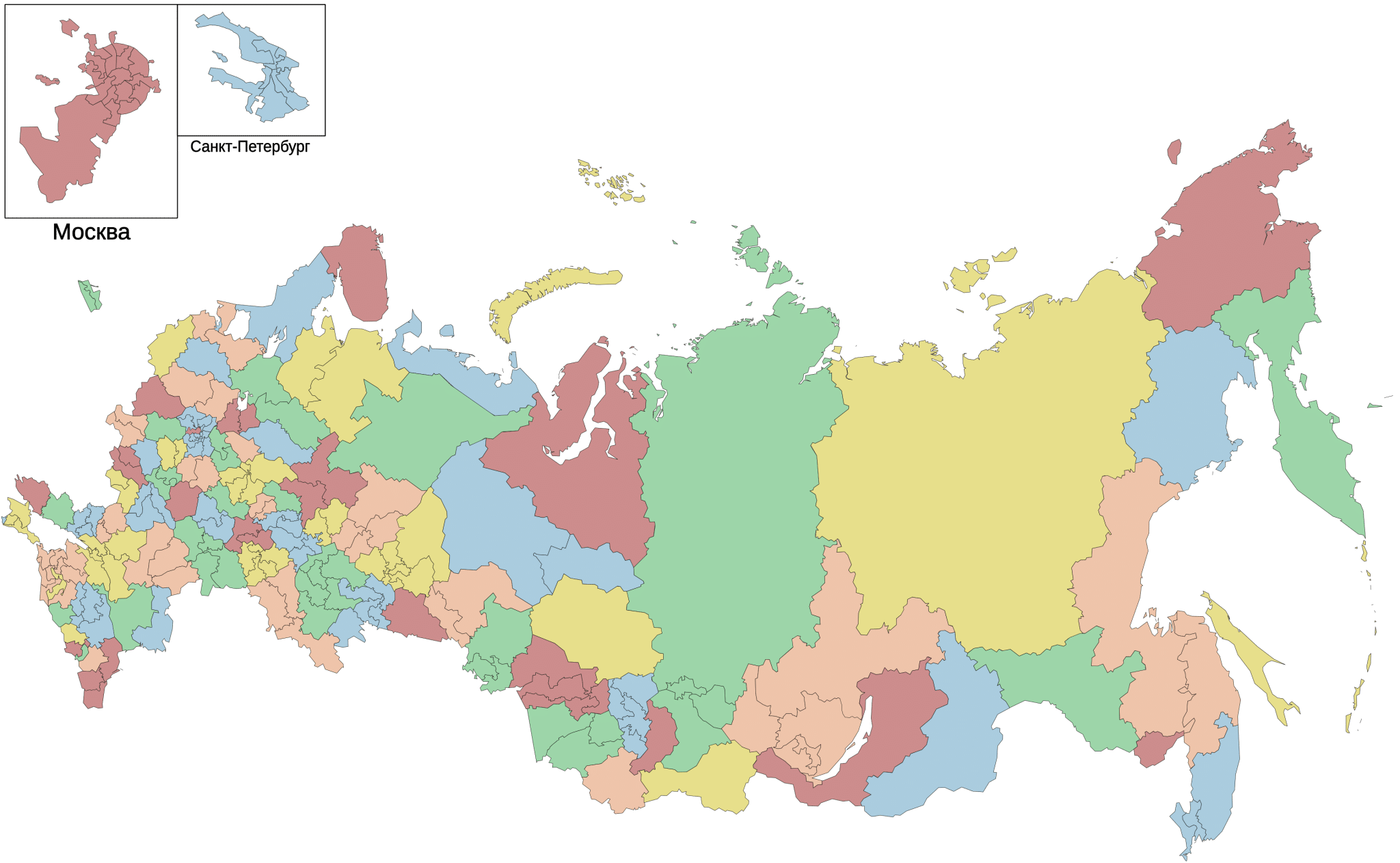
Russia’s electoral districts for the 2026 Duma Elections cover Crimea and four other disputed territories in Ukraine.
As in the United States, federal law in Russia supersedes regional law. No regional government may legally enact laws that contradict federal legislation.
Russia’s fiscal system is far more centralized than that of the US. Federal subjects directly collect only a few minor taxes such as property taxes, vehicle taxes, and gambling taxes. Major revenue sources—including personal income taxes, corporate profit taxes, and mineral extraction taxes—are collected by the federal government and then redistributed to the regions.
Despite this, federal law can mandate that regions implement and fund federal priorities. Current mandated expenses, for example, include Russia’s generous military recruitment bonuses as well as employment and psychological support programs for war veterans. In theory, redistributed federal revenues should cover these obligations, but in practice they often do not. As a result, 74 federal subjects are currently running budget deficits and the regions hold a combined debt of over $25 billion. This debt is rising rapidly.
Russia’s federal reserve funds, currently estimated at roughly $750 billion, could easily cover these deficits if necessary. However, the government has traditionally been cautious about drawing on its reserves, especially after Western countries froze roughly half of its total following the invasion of Ukraine. Even so, the remaining reserves are still more than sufficient to finance a complete bailout of all affected regions.
Russia’s Six (Largely Archaic) Regional Categories
While the United States is divided primarily into states and territories, Russia’s federal subjects fall into six categories. Today, the differences between these categories are mostly historical and carry relatively little practical significance.
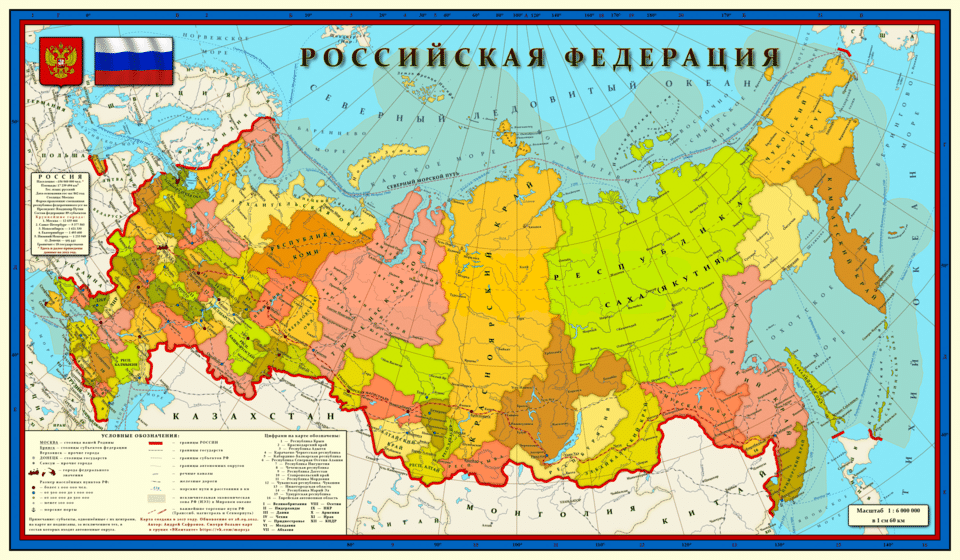
An administrative map of Russia as printed in Russia. Shown are Russia’s disputed regions as well as internationally recognized maritime jurisdiction. Russia’s claimed maritime jurisdiction is much larger.
The most straightforward category is the “city of federal importance” (город федерального значения). These are cities that function as federal subjects in their own right, reporting directly to the federal government rather than to another constituent entity. This status is granted to cities considered nationally significant and in need of direct access to federal resources. Russia has three such cities: Moscow and St. Petersburg—which together account for more than 13 percent of the country’s population—and Sevastopol, located on the disputed Crimean Peninsula and home to Russia’s strategically important Black Sea Fleet.
Outside of this, the variety of names reflects the piecemeal expansion of the Russian state under the tsars. Different administrative units were created to govern newly conquered territories, accommodate agreements with local populations, and/or manage frontier regions.
The oblast’ (область) is Russia’s most common type of federal subject. The name derives from obladat’ (обладать), a Russian verb meaning “to possess,” referring to the fact that they were directly owned by the Tsar. The designation of “krai” (край), which still means “edge” or “borderland” in Russian, originally referred to frontier territories. These militarized border zones were administered by governor-generals and held very little autonomous power. Today, however, there is effectively no difference between an oblast and a krai.
Russia’s other three categories are formed around indigenous populations. While the US has Indian reservations that function with considerable autonomy in largely invisible areas, Russia’s major indigenous populations live within what are essentially whole states named for them.
For example, the name “okrug” (округ), comes from the Russian “krug,” meaning “circle.” It refers to a territory that encircled a specific indigenous population. Similarly, a republic (республика), is also formed around and named for an indigenous population. These divisions, as well as Russia’s singular autonomous oblast (автономная область), have certain cultural rights designed to help protect the local ethnic traditions and cultures. The effective difference between the three designations is mostly semantic. Republics carry more prestige, and get to call their founding documents “constitutions” rather than “charters,” but otherwise differ little from the others. The singular Jewish Autonomous Oblast is an oblast because it was formed not around an existing population, but in the USSR’s anticipation of large numbers of Jewish settlers (that none-the-less never arrived in large numbers).
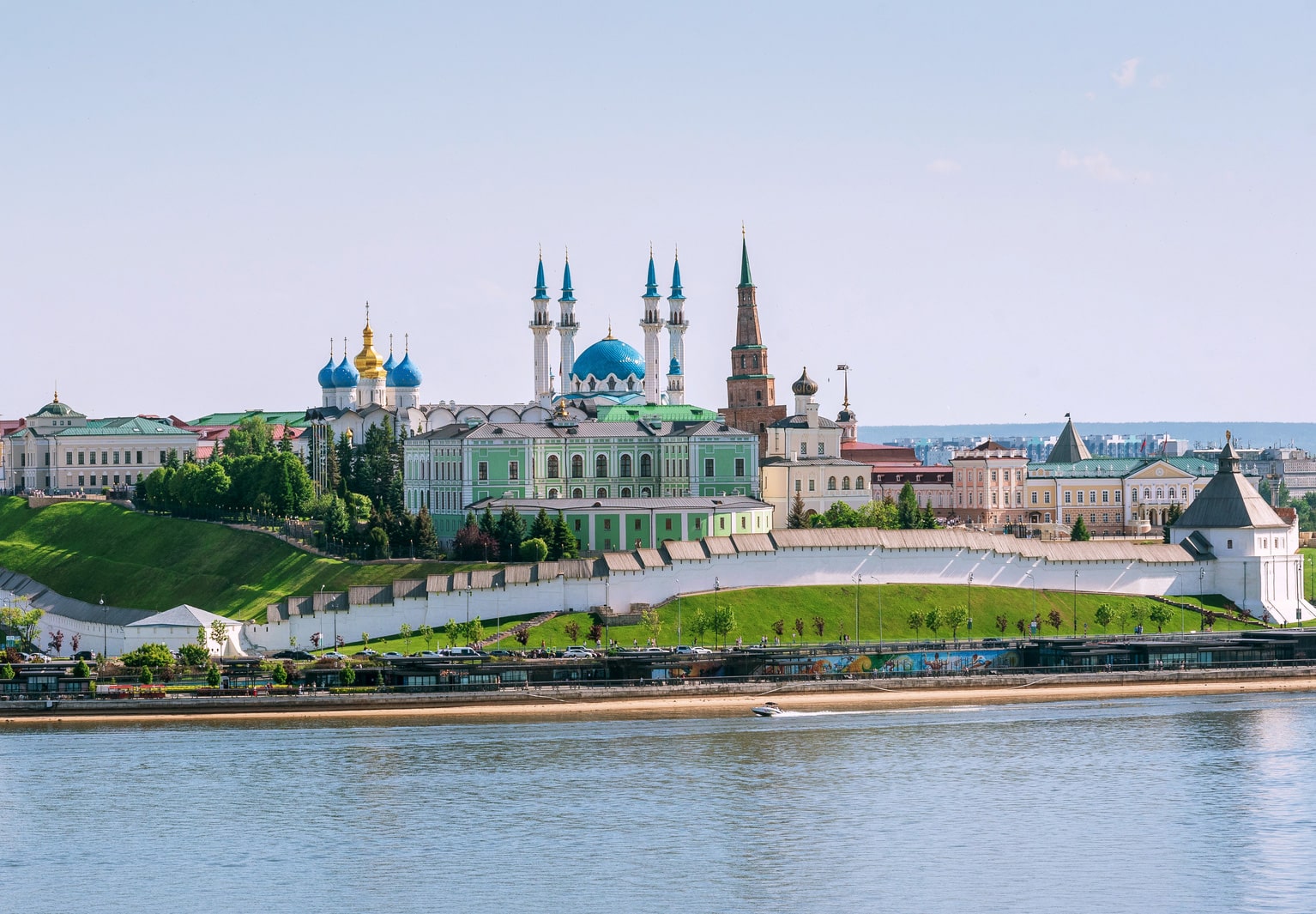
The Kremlin in Kazan, the capital of Tatarstan, contains both a large mosque and a smaller Orthodox church.
The difference between Russia’s ethnic and non-ethnic territories are also now increasingly semantic. By federal law, all government services must still be available in Russian, and budget pressures often make fully bilingual local administration difficult to sustain. This has been especially contentious in education, where language policy is central to cultural preservation. A 2017 federal decree limited instruction in minority languages in public schools to a maximum of two hours per week. Instruction was also made strictly optional, requiring written parental consent. The policy followed complaints from ethnic Russian parents who argued that Russian-language instruction was being neglected. In response, many indigenous communities have had to increasingly turn to private schools, supplementary language programs, and community organizations to maintain bilingual education.
Although this patchwork of archaic administrative terms may seem unusual to Americans, similar systems once existed across much of Europe. In Great Britain, for instance, the king rules over various kingdoms, much like the Russian tsar held oblasts (with both words referring to crown ownership). The British King also once ruled marches, which closely resembled krais. England also maintained ethnic administrative regions such as the Danelaw, associated with Viking settlement, and the Welsh Marches, populated by the Welsh. England began consolidating these systems in the seventeenth century, however, and eventually abandoned some terms like “march.” Meanwhile, Russia’s legal and administrative standardization did not seriously begin until the mid-nineteenth century and even then proceeded slowly. Areas named as krais did not tend to change their status even after Russia’s borders had moved well beyond the original krai. As a result, more of Russia’s older regional names have survived into the modern era, although there is little practical difference between them today.
Security Zones: Disputed Regions and Claims
Russia’s claimed territory over land and sea is much larger than internationally recognized. This includes its administration of several regions most of the world recognizes as being part of Ukraine as well as sweeping Arctic regions that overlap with areas long claimed by other countries or labeled as international territory.
Russia’s Disputed Regions: The War with Ukraine
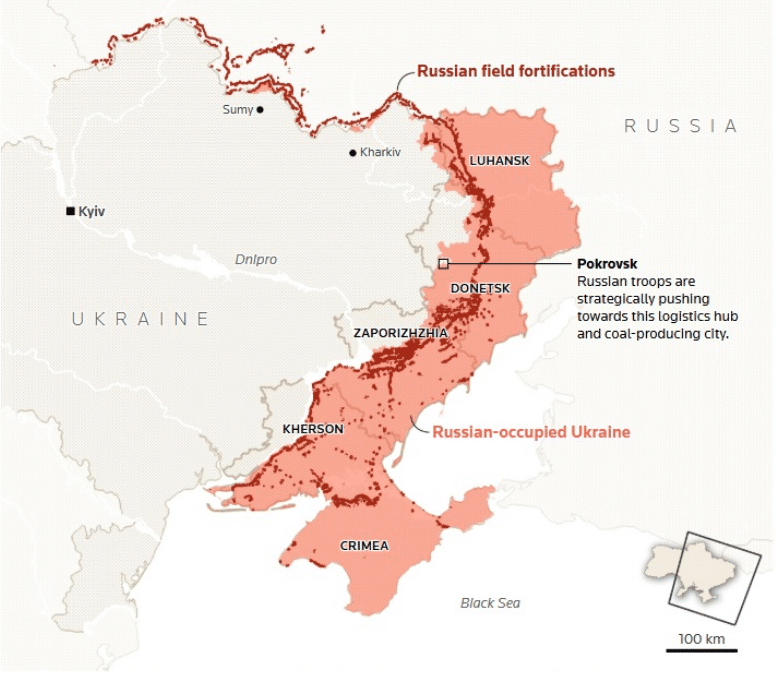
Although Russia claims its disputed territories in their entirety, it has never had full military control of them. The map here is from the Institute for the Study of War from April, 2025. Over the last year, the front lines have changed little.
Russia currently administers several territories whose sovereignty is internationally disputed. These include the republic of Crimea, federal city of Sevastopol and the oblasts of Donetsk, Luhansk, Zaporizhzhia, and Kherson. Disputed referendums were held in these regions in 2014 and 2022. Russia bases its administrative control of the regions on these. In the case of the four oblasts, Russia claims the regions up to their Soviet-era borders. However, Russia is still fighting militarily to take control of those borders.
Militarily, Crimea projects power into the Black Sea, which Russia considers essential to controlling potential invasion routes toward the Caucasus. The oblasts together are heavily industrialized, with many factories integrated into Russia’s space and military programs. They also form a landbridge securing Russian access to Crimea. Russia has invested heavily in roads, energy systems, and the massive Crimean Bridge connecting the peninsula to southern Russia. This investment shows that maintaining connectivity and economic viability are major priorities for Russia.
Demographically, most of these territories have urban centers that are heavily Russian-speaking, and rural settings where Ukrainian was dominant. Since the war, many Ukrainians have been displaced from these regions. The Crimean Tatars, an Indigenous Turkic Muslim people, have often opposed Russian rule in Crimea and faced political pressure for their actions.
Russia’s Arctic Region
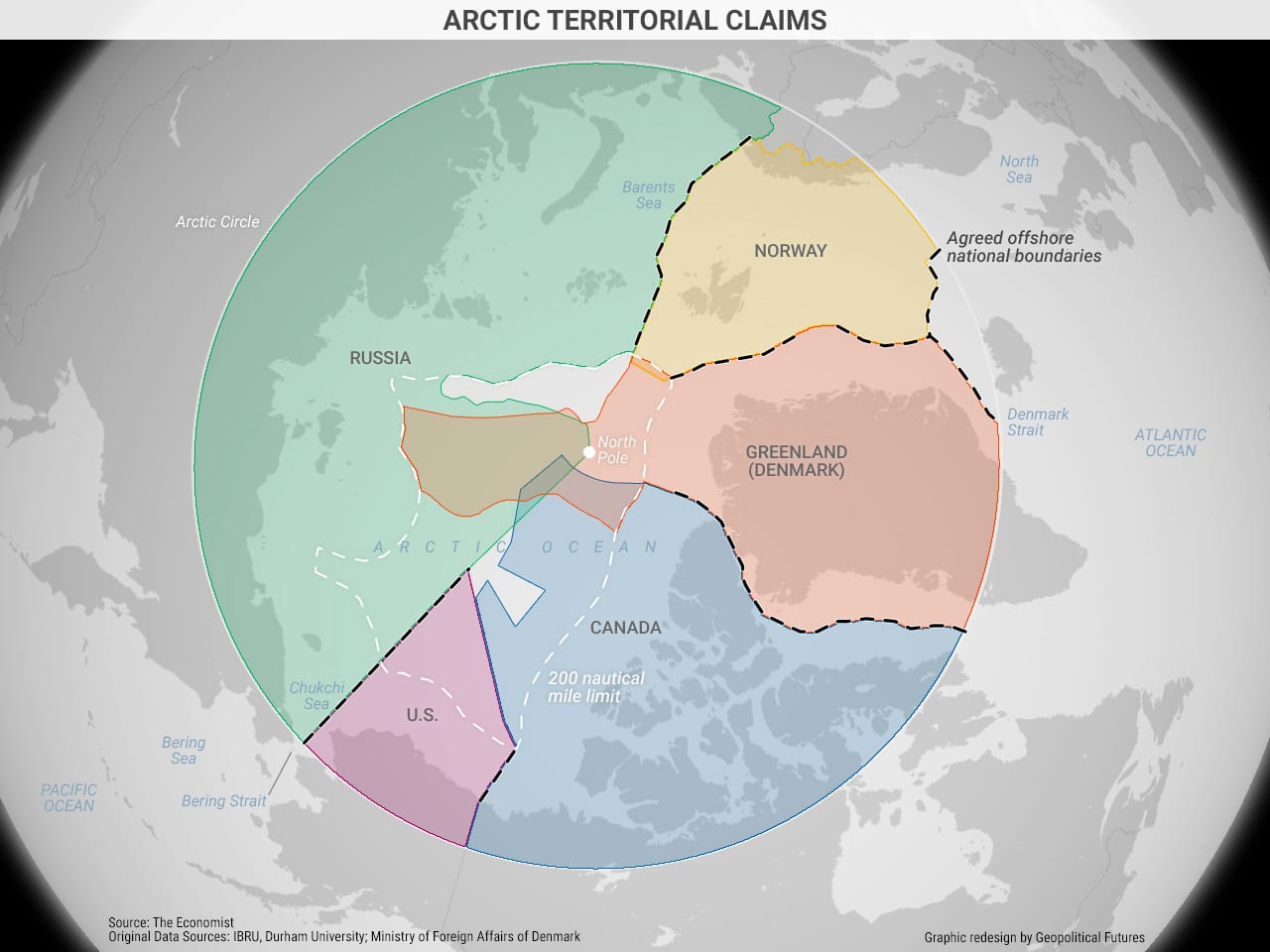
Russia’s arctic territorial claims overlap with Greenland’s and Canada’s. Map from Geopolitical Futures
Russia’s official Arctic territory stretches across 15,000 miles of coastline, making it the largest Arctic nation in the world. However, Moscow has leveraged the UN Convention on the Law of the Sea (UNCLOS), arguing that vast underwater mountain ranges are extensions of Russia’s continental shelf. Based on this, Russia claims an additional 1.2 million square kilometers (about 463,000 square miles) of the Arctic seabed. Russia even sent a submersible to plant a Russian flag on the North Pole to punctuate its claims to the territory. Russia’s claims overlap with those of Canada and Denmark. Resolving the dispute is partly complicated by the fact that another Arctic power, the US, has not fully recognized UNCLOS.
The value of the undersea territory is undeniable. Official Russian estimates project that these claimed shelves hold up to 5 billion metric tons of oil and gas, as well as an estimated 90% of Russia’s remaining nickel, cobalt, and platinum reserves. Russia is also hoping that the Northern Sea Route, by far the shortest sea route between East Asia and Western Europe, will continue to rise in importance with global warming. Russia has modernized Soviet-era military bases and deployed advanced fleets of nuclear icebreakers to clear and develop these shipping lanes along its northern coast. Traffic is increasing, but still hampered by seasonal ice floes.
On land, Russia’s far north Arctic regions also are home to enormous reserves of oil, natural gas, nickel, and rare earth minerals. The Yamalo-Nenets region alone accounts for as much as 90% of Russia’s natural gas production. Much of the land is treeless, swampy, and sparsely populated, with extremely harsh winters and long polar nights. Environmental challenges include melting permafrost, coastal erosion, and industrial pollution.
Indigenous populations include Nenets, Chukchi, Evenks, Dolgans, Khanty, Mansi, and others who have traditionally survived through reindeer herding, fishing, and hunting. Ethnic Russians form the majority population in most Arctic urban centers such as Murmansk, Norilsk, and Novy Urengoy. Most moved there under the USSR as resource extraction was developed.
Russia’s Federal Districts: Geography, Demographics, and Economy
Although Russia’s eight federal districts are massive and diverse within themselves, Russia’s geography, economy, and demographics can be broadly understood by overviewing these official divisions.
Central Federal District
Centered on Moscow, this is Russia’s political, financial, and demographic core. It contains roughly a quarter of the country’s population and produces the largest share of national GDP through finance, technology, manufacturing, logistics, retail, and government administration. The district is heavily urbanized and overwhelmingly ethnic Russian, although it is also the primary destination for immigrant workers, most of whom come from Central Asia.
Geographically, the region lies on the East European Plain, with rolling farmland, mixed forest, and relatively mild continental weather. Much of the north is forested, while the south contains fertile “black earth” agricultural zones. Heavy industry, transportation networks, and service-sector employment dominate the economy.
Northwestern Federal District
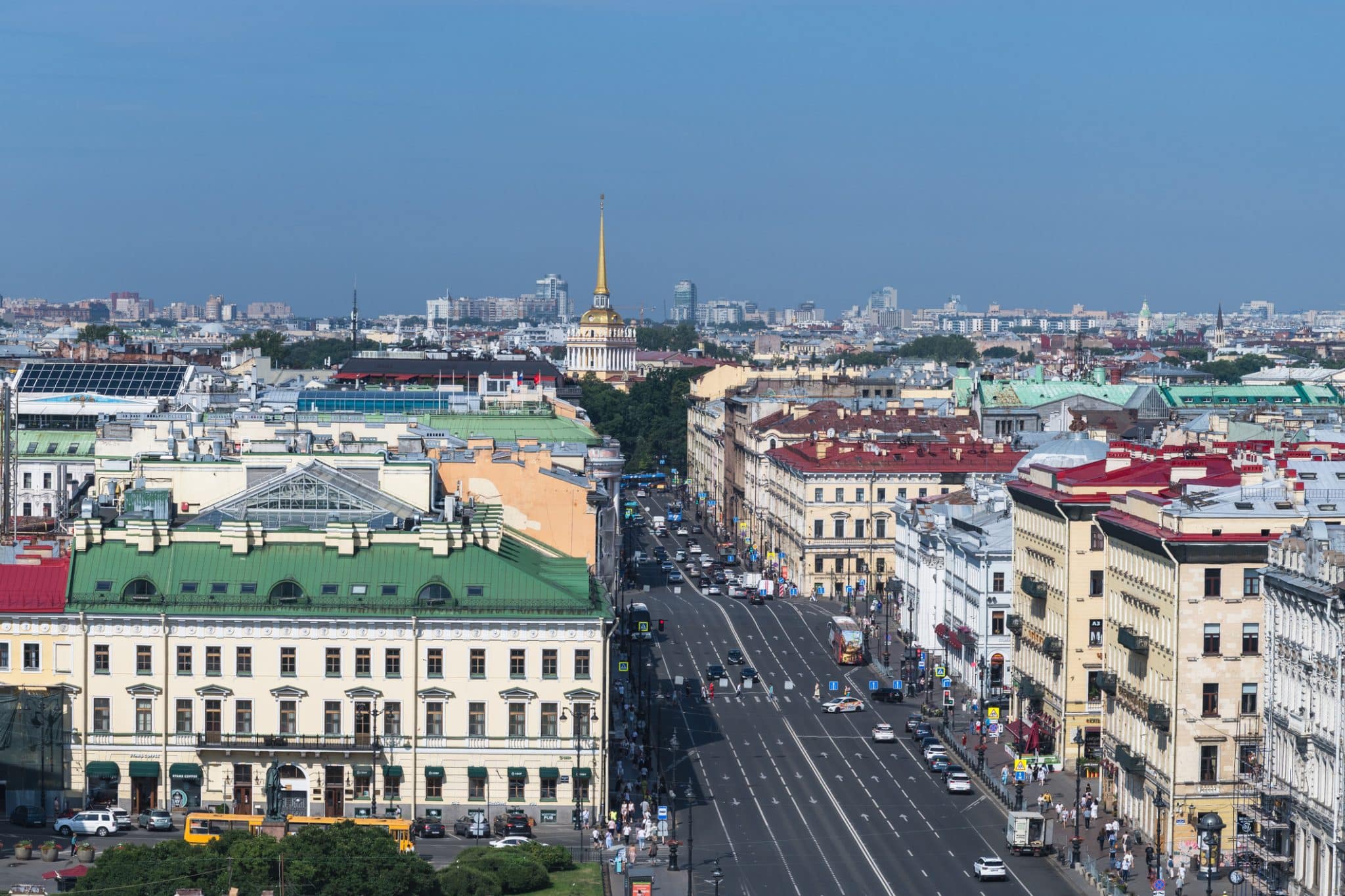
St. Petersburg is Russia’s second most populous city.
Anchored by Saint Petersburg, the Northwestern District is Russia’s primary gateway to Europe via the Baltic Sea and Arctic ports. Its economy relies on shipping, heavy industry, shipbuilding, energy exports, fishing, forestry, mining, and tourism. Saint Petersburg drives finance, education, and manufacturing.
Much of the district is heavily forested and otherwise dominated by cold, wet tundra and Arctic coastline. Northern regions are sparsely populated, dominated by Russians but also with indigenous minorities such as Nenets, Komi, Saami, and Karelians, most of which have ties to Uralic or Finnish cultures.
Southern Federal District
The Southern District stretches from the Black Sea to the Caspian region and includes some of Russia’s most fertile agricultural land. Dominated by warm steppe, river valleys, and coastal plains, the district’s economy is driven by the grain, livestock, sunflower oil and wine production, and tourism. Now merged with Russia’s unrecognized territories along the frontlines with Ukraine, the district also hosts important military infrastructure and Black Sea shipping routes.
The population is primarily Russian and Ukrainian-speaking communities with a smaller minority of Armenians. The Kalmyks, a Mongolian ethnicity that is traditionally Buddhist, make up 60% of the population of the Republic of Kalmykia but only about 1.6% of the population overall of the Southern Federal District.
North Caucasian Federal District
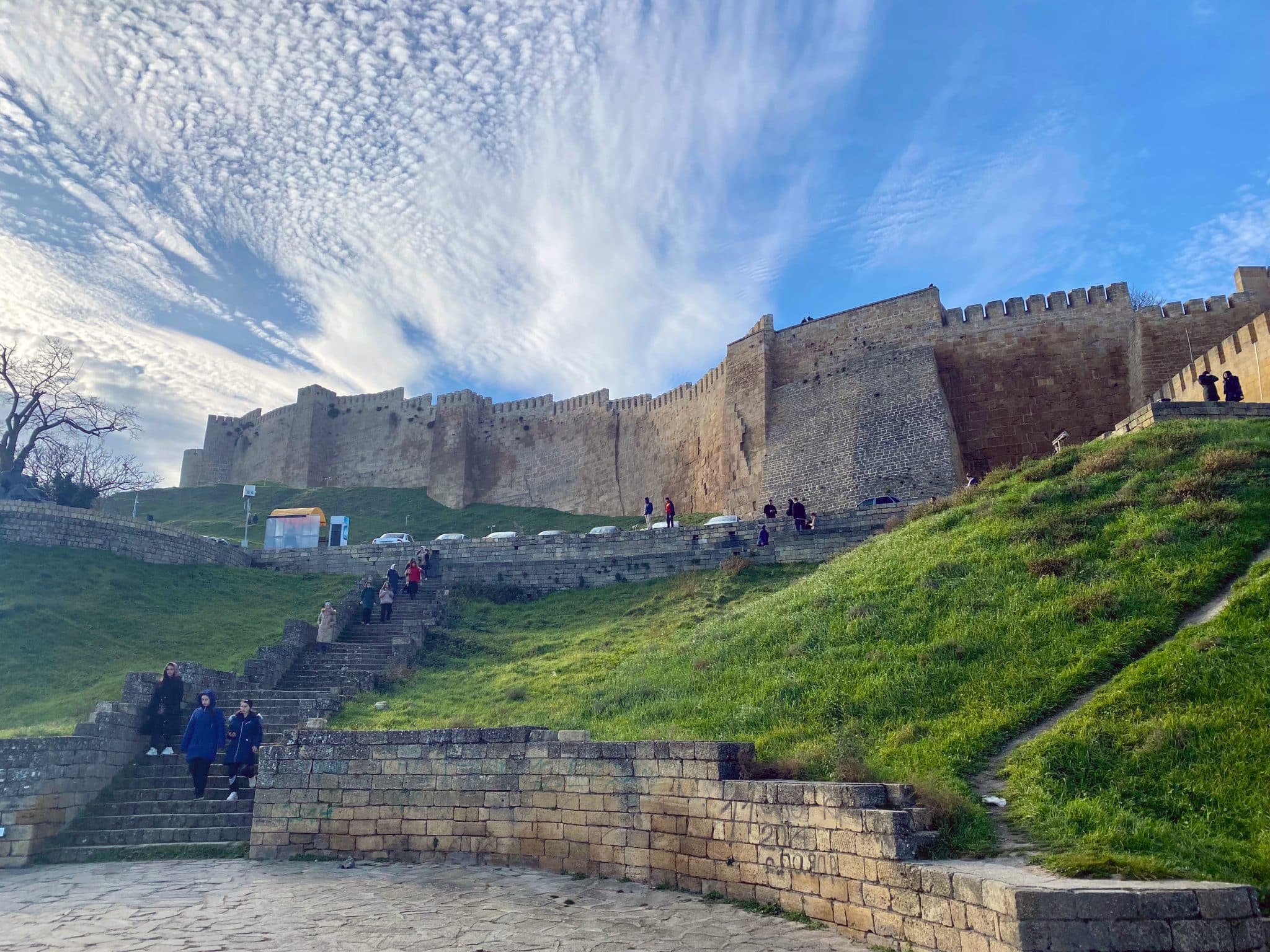
Naryn-Kala is an ancient citadel in Derbent, Russia.
The North Caucasian District is Russia’s smallest but also most ethnically diverse and politically sensitive region. Although Russians are the most numerous single identity, they make up only about a third of the population, with the rest split between about 40 other ethnicities. These minorities are mostly indigenous and Muslim, including Chechens, Avars, Ingush, Circassians, Kabardians, Balkars, and Ossetians. Historically, the region has seen frequent insurgencies, separatist conflicts, and ethnic tensions both with Russians and between minorities.
The region is dominated by the Caucasus range. Unemployment and poverty have been persistently high in the region, with agriculture, oil production, tourism, and federal subsidies being major economic drivers.
Volga Federal District
Located around the Volga River basin, this district is one of Russia’s industrial and cultural centers. Major industries include automobile manufacturing, oil and gas, hydropower, petrochemicals, aviation, machine-building, and agriculture. Cities such as Kazan, Nizhny Novgorod, and Samara are major industrial hubs. Volgograd is a cornerstone of Russia’s ground transport networks, with rails, roads, and pipelines connecting Moscow to both the Caucasus in the South and Siberia in the East.
The district consists mostly of forest-steppe and fertile plains. Alongside Russians live large populations of Tatars (Russia’s largest minority), Bashkirs, Chuvash, Mari, Mordvins, and Udmurts, all of which have titular republics within the district.
Ural Federal District
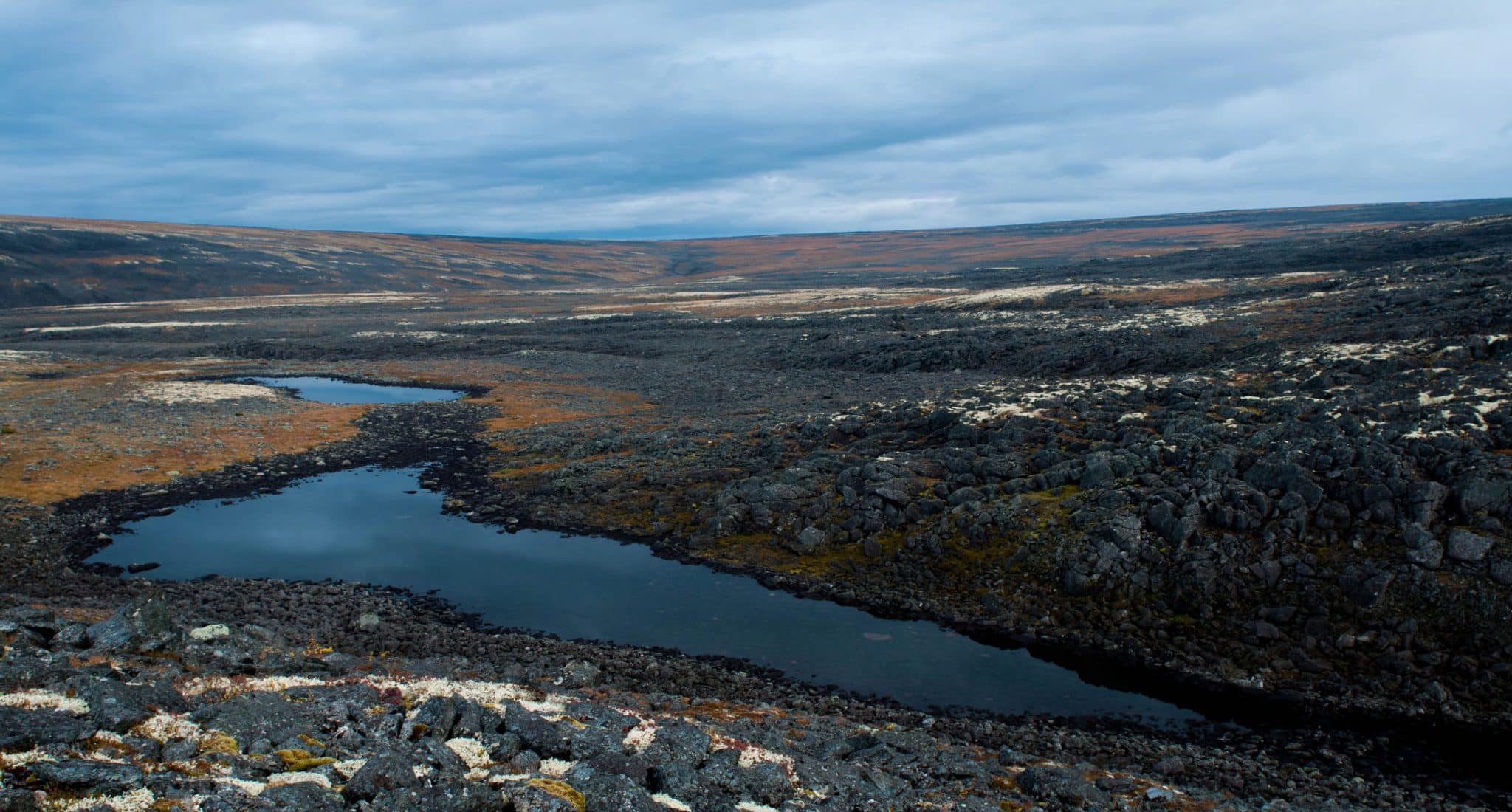
Arctic tundra in autumn.
The Urals District has a relatively modest population, but large deposits of hydrocarbons and metals. It was also heavily industrialized by the Soviets, meaning that its share to Russia’s export earnings and GDP is outsized.
The Ural mountains symbolically separate what Russians consider “European” and “Asiatic” Russia. They also mark the beginning of what is considered Siberia. However, the mountain range is thin and in many southern areas amounts to not much more than rolling foothills. They have never formed a hard or defensible border for Russia, a major reason why the tsars continued pushing east in their expansion, eventually conquering all of the nomadic tribes of Siberia.
The hills and mountains of the Urals transition west into swampy, forested Siberian lowlands. Vast taiga forests and Arctic tundra dominate much of the north. Indigenous groups include Khanty, Mansi, and Nenets peoples.
Siberian Federal District
The Siberian District covers a vast expanse of central and eastern Russia and is dominated by taiga forest and permafrost. Despite its rich natural resources, the region has always been poorly developed in part because its extreme continental weather makes settlement difficult and because its river systems, although extensive, all run south to north, while commerce flows mostly east to west. While roads and rails have since been completed, they are long and expensive to both build and maintain over harsh terrain and weather.
In the district’s far south is an area where three tectonic plates meet. Their extreme seismic activity helped create Lake Baikal, the world’s deepest freshwater lake. It is considered a holy site to the local Buryat and Evenk cultures. Baikal’s unique hydrology and environment, which includes several native species known only to its region, has made it one of Russia’s most important environmental landmarks. Efforts to save it from industrial pollution made nearby Irkutsk one of the USSR’s early centers of environmental activism.
Much of the district is sparsely populated, with settlements concentrated along railways and southern river corridors. Russians form the majority population overall, living alongside minorities that include indigenous Buryats, Evenks, Tuvans, Altaians, and Khakas.
The economy relies heavily on mining, metallurgy, hydroelectric power, timber, and coal. Relatively isolated, the USSR developed Novosibirsk and Irkutsk as major research centers where secrets could be kept. The two cities remain major educational and scientific research centers.
Far Eastern Federal District
The Far Eastern District is Russia’s largest federal district by land area but one of its least populated. Stretching along Russia’s entire Pacific Ocean coast, it contains enormous reserves of oil, gas, gold, diamonds, timber, and fish. Despite its proximity to some of the world’s largest economies, the region’s rugged geography has hindered development. Mountain ranges often run directly to the coastline, limiting transportation routes and concentrating the vast majority of the district’s trade through a single port: Vladivostok, where Russia’s Pacific Naval Fleet is also based.
The massive Sakha Republic makes up nearly half the district by land area, but is geographically and culturally much closer to the neighboring Siberian District. The district encompasses an extraordinary range of landscapes, including volcanic peninsulas, Arctic tundra, dense forest, mountain chains, and Pacific coastline. Large parts are remote and climatically harsh. Indigenous peoples include Chukchi, Evenks, Koryaks, Yakuts, Nanai, and others, though ethnic Russians remain the majority overall. Population decline and labor shortages have long challenged the region, prompting Moscow to promote settlement with higher pay under the USSR and with land giveaways in more recent times.
Conclusion
Beneath the centralized authority of Russia’s federal government lies a vast and remarkably diverse country shaped by geography, history, economics, and ethnicity. From the densely populated cities of European Russia to the remote Arctic tundra and Pacific coast, each region faces its own opportunities and challenges.
Understanding Russia’s federal subjects and districts provides valuable insight into how the country functions in practice.
You’ll Also Love

Snapshot of the Russian Economy
The Soviet economy developed under Communist ideals for some seventy-five years. These ideals kept that development focused on what had been the centerpieces of 19th…

Recycling and Waste Recovery in Russia: Policy and Infrastructure Challenges
“Municipal solid waste,” or “MSW,” is the technical term given to “garbage consisting of everyday items used by the public.” Managing MSW is increasingly a…

How the 2014 Economic Crisis Changed Russia’s Economy
Just about everyone in the United States knows something about the global financial crisis of 2008-2009. That particular crisis started in the U.S. housing and…

Russia’s Arctic Development: Problems and Priorities
What climate change and arctic development means for Russia, the environment, and the international community. The Arctic region is a vast area whose economic potential,…

A Guide to Energy Security in the Caucasus
The South Caucasus region (Azerbaijan, Georgia, and Armenia) is a key corridor between European markets and the energy-rich Caspian Basin. The region itself is also…
