

Russian remains in wide use across the Eurasian space, although its role varies. Each country has its own language in wide and proud usage. However, in many Central Asian countries, Russian remains a language used by most of the urban population in daily transactions. In the Caucasus, Baltics, and Central and Eastern Europe, language carries additional cultural and political implications, but most urban centers in these regions have significant numbers of Russian speakers.
Russian remains a useful travel language in these areas. The following bilingual resource is not meant to be a travel guide and you should not, for instance, expect an airline attendant in Warsaw to speak Russian. This is meant as an introduction to the travel documents and physical infrastructure one encounters on travel to the former Communist bloc as well as the Russian-language vocabulary needed to have a conversation in Russian about it. We hope that this will be of interest to intermediate to advanced students of the Russian language interested in travel, policy, and development issues.
Travel Documents
Получение визы (Getting a visa) looks very different depending on which country you are visiting. Some require advance preparation; others welcome Americans with remarkable ease. If you are on an SRAS program, SRAS will help guide you through the визовые требования и правила въезда (visa requirements and entry regulations).
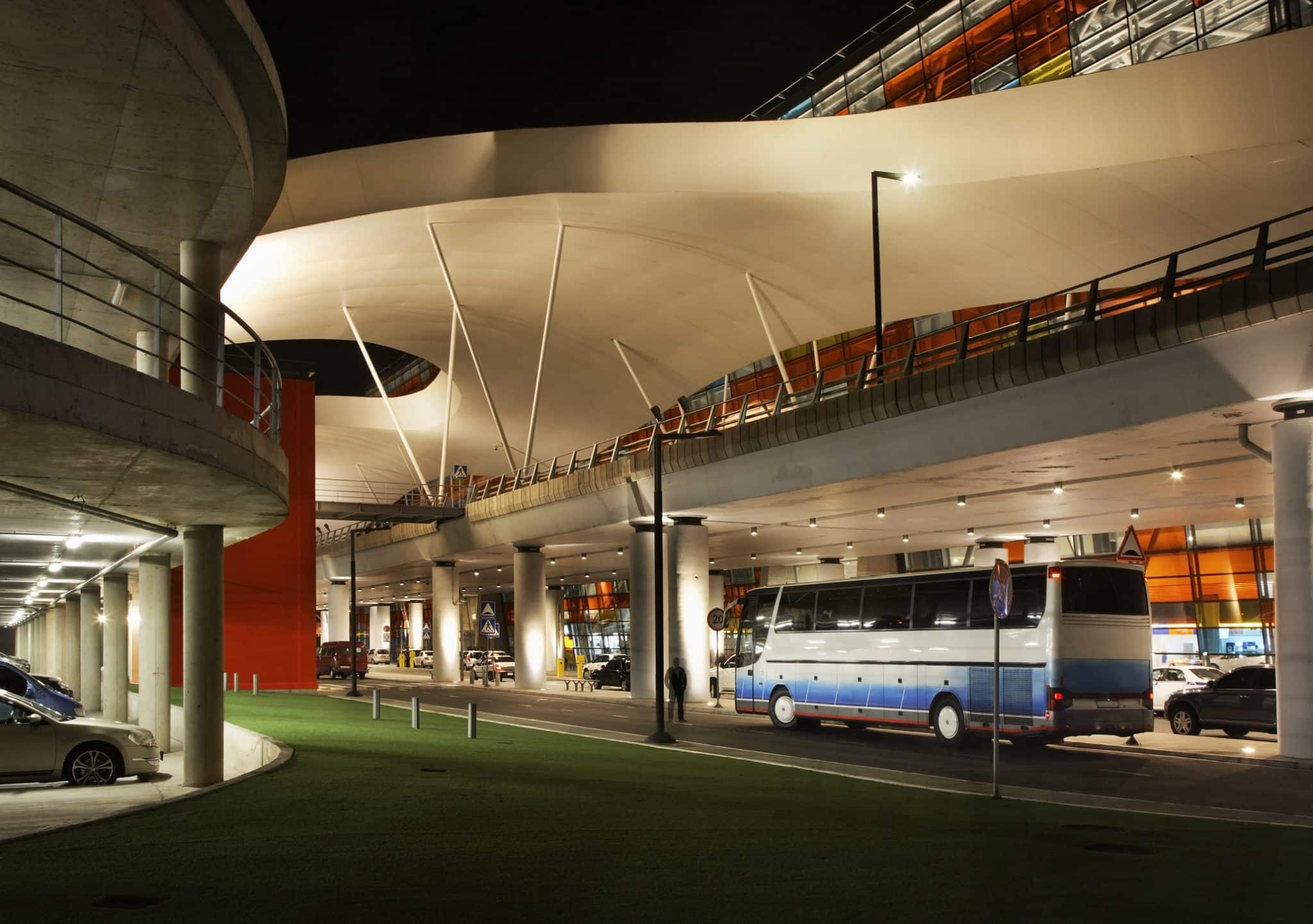
Zvartnots International Airport in Yerevan, Armenia is currently undergoing a nearly half-billion dollar modernization.
Эти правила могут быстро меняться (these regulations can change rapidly). Check the state department travel website for the country you are visiting and the website for that country’s consular office in the US before planning your trip abroad. Консульские отделы действуют в составе посольств и консульствах (consular offices operate within embassies and consulates) and are in charge of выдачу виз (issuing visas) for their respective countries. You can usually find them by Googling, for instance, “Kyrgyzstan embassy in the US” and exploring the embassy website.
Краткосрочное пребывание для туристов (short-term stays for tourists) are often easy for Americans. For instance, in Kyrgyzstan and Uzbekistan, Americans enjoy visa-free entry for up to 30 days. Georgia is exceptionally generous, allowing Americans to stay up to a full year without a visa. Armenia offers visa-free stays of up to 180 days. Latvia and Poland, as members of the Шенгенская зона (Schengen Zone), require no visa at all for 90 days.
Even if you don’t technically need a visa, you may still need an “authorization.” For instance, for many Schengen countries, including Latvia and Poland, гражданам США потребуется авторизация ETIAS (U.S. citizens will need an ETIAS authorization). This is a full online service available for a small fee that functions much like a fully digital visa, allowing you entry to the country without having a paper visa in your passport, but still позволяя правительствам проводить предварительную проверку путешественников (allowing governments to pre-vet travelers).
Длительное проживание (long-term stays) for study abroad programs, for instance, can require more planning. You may need to продлить визу (extend your visa) or сменить визу (switch visas) in-country. This will have its own process and regulations.
In every case, your паспорт (passport) is the foundation of your legal presence. Ensure it is valid for at least six months beyond your planned departure date — a requirement enforced by паспортный контроль (passport control) at most of these destinations. Make sure you also have как минимум две пустые страницы в паспорте (at least two blank pages available in your passport) as passport control will поставят в него штамп при въезде (stamp the passport upon entry).
Some locations have also issued a миграционная карта (migration card) to any arriving foreigner. This tiny document, if given, is required for the next step of registering your place of residence (see below) and will cause all kinds of problems if lost. Most places have now, thankfully, switched to entirely цифровые системы (digital systems) for this. However, make sure you keep anything given to you upon arrival and guard it carefully for the duration of your stay. You never know what will be of vital importance later.
Регистрация (registration) is another shared requirement across Central Asia and the Caucasus. In Uzbekistan, hotels handle this automatically and provide you a регистрационный талон (registration slip), which you should keep. In Kyrgyzstan and Armenia, similar rules apply: if you stay in a hotel, registration should be automatic, but if you stay with a host family or in a private rental, the host must register you. Latvia and Poland have no such registration requirement for tourists.
You should also keep in mind that to пребывать легально (stay legal), you also need to abide by its limitations. You не имеете права работать (do not have the right to work), you cannot заниматься предпринимательской деятельностью (conduct business), and you cannot превышать срок действия визы (overstay the visa) or разрешенный срок безвизового пребывания (the allowed visa-free time) within a country. The consequences of falling out of compliance range from штрафы (fines) to запрет на въезд (entry bans) depending on the severity of the infraction.
In short, make sure to know your documents and the rules of the country before you go. This is important to making sure that your пребывание в стране будет безопасным и приятным (stay is safe and enjoyable).
Airports in Russian
To travel most places, an American должен купить авиабилет (needs to buy an airplane ticket). This can be a complicated and expensive process. Generally, its cheaper to buy tickets well in advance. It is cheaper to buy невозвратный билет (a non-refundable ticket), but a traveler рискует потерять деньги (risks losing their money) if his/her plans change.
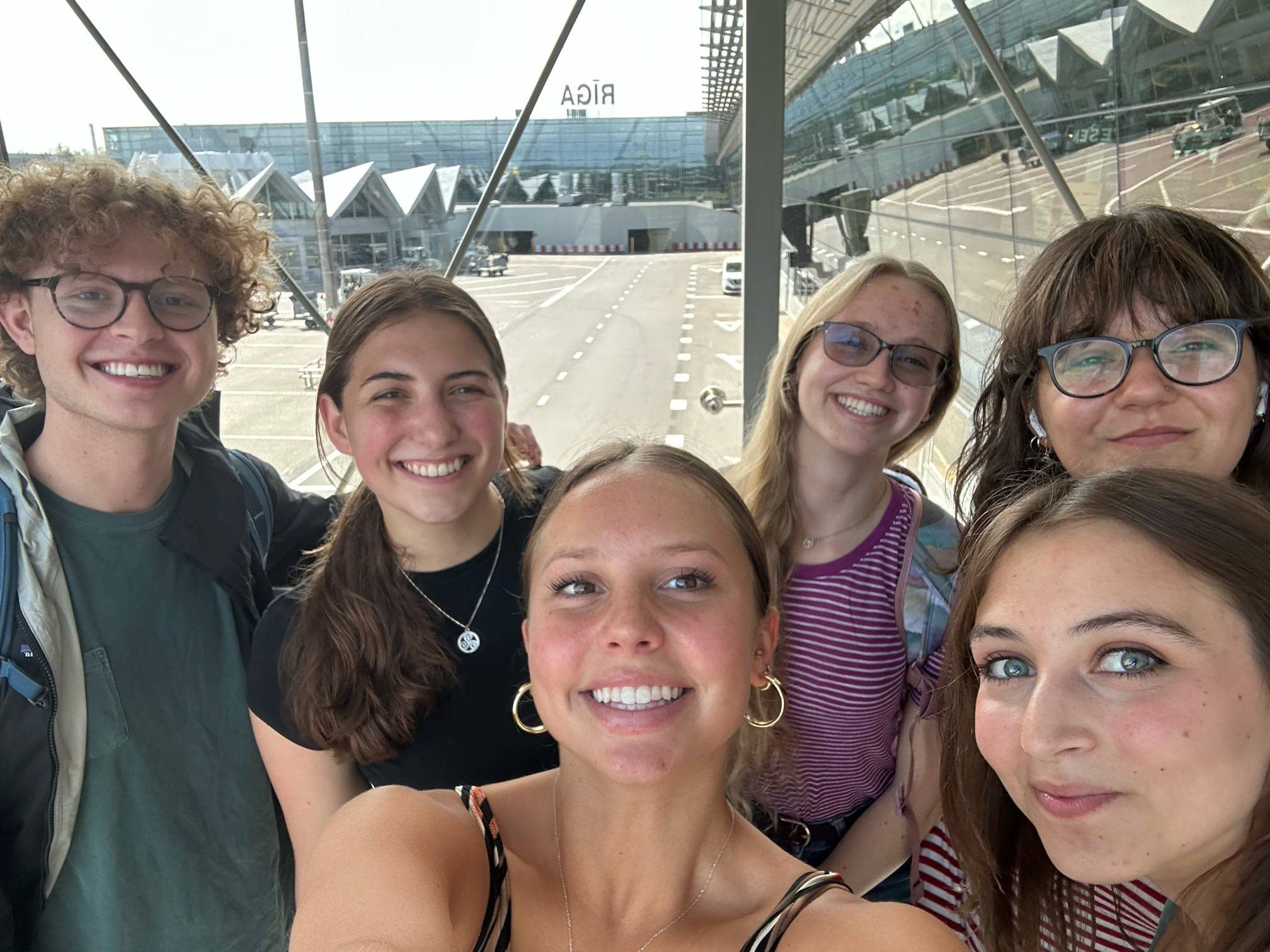
SRAS students at the Riga airport for SRAS programs.
Most international airports have signage and at least some staff that speak English and/or Russian. At check in, the traveler is likely to be asked standard questions like “Куда летите?” (“To where are you flying?”), “Багаж есть?” (“Do you have baggage?”), “Есть ручная кладь?” (“Do you have carry-on?”). After a passenger показывает паспорт (shows their passport) and получает посадочный талон (gets a boarding pass), a passenger might ask the attendant, “Куда идти на посадку?” (Where should I go to board?) The passenger would then be given directions to the зал убытия (departure hall).
When a passenger проходит досмотр (passes through security), their ручную кладь могут выборочно проверить (carry-on may be inspected selectively). The security personnel might ask, “Откройте сумку, пожалуйста” (“Open your bag, please”) and/or “Включите ноутбук” (“Turn on your laptop”).
Finding your терминал (terminal) and выход на посадку (departure gate) is usually not difficult but sometimes you may hear an announcement that “Выход на посадку был изменен” (“The departure gate has been changed”), and a passenger will have to find the new gate. A notice will likely appear at the original gate as well.
While waiting, a traveler might make small talk with questions to fellow passengers like “Вы тоже летите в США?” (“Are you also going to the US?”) or “Вы не знаете, это хорошее кафе?” (“Do you know if this is a good cafe?”) or “Не знаете, здесь часто такая погода?” (“Do you know if the weather is often like this here?”)
Once a traveler has arrived to a new country, they will have to go through паспортный контроль (passport control). There, they are usually asked “Какая цель вашего приезда?” (“What is the purpose of your visit?”) This is important, especially if you have a visa. If you do, make sure to give an answer that matches the purpose of your visa.
Next, you’ll need to find your багажную ленту (baggage carousel) and забрать свой багаж (collect your luggage). Finally, you will then пройдёте таможенный контроль (pass through customs). Most people will take the «зеленый коридор» (green line) for «нечего декларировать» (“nothing to declare”) so long as they aren’t bringing in more than $10,000.
Most airports are serviced by автобусы (buses), такси (taxis), and у некоторых будут выделенные железнодорожные или линии метро (some will have dedicated train or subway lines). If taking a taxi, закажите его через приложение (hail one with an app) or найдите стойку таксомоторной компании (find a taxi company desk) inside the airport. Taxis that wait in the hall or just outside are often not official and may pose a safety risk and/or will overcharge you.
– Lost Luggage
There are many potential problems you might experience when traveling, and one of the most common is потерянный багаж (lost luggage). If your luggage is lost, you should обратиться к сотрудникам службы розыска багажа (notify the baggage attendants) до выхода из зоны прибытия (before leaving the arrival area). Вам будет необходимо заполнить специальный бланк (you will need to fill out a special form) to begin the поиск потерянного багажа (search for lost luggage). If you traveled on different airlines on various этапы поездки (legs of your journey), you should notify the airline that took you to your пункт назначения (final destination).

For guides on packing and planning for study abroad, see our partner site at SRASStudents.org.
Sometimes you will need to come back to the airport to забрать (pick up) your suitcase, but you may be asked for a местный адрес (local address) to have it delivered to. Make sure you ask what the policy of the airline is. You will also need to know your номер рейса (flight number). In addition, you should have a багажная квитанция (luggage receipt) on the back of your посадочный талон (boarding pass) that you received when you сдал(а) чемодан (checked your suitcase) at your пункт вылета (point of origin). Airline personnel will need the information on this tag to отслеживать (track) your luggage.
In your discussion with airline personnel, they will ask you to описать (describe) your lost baggage. For instance, do you have a чемодан на колесах (suitcase with wheels) or a большая спортивная сумка (duffel bag), is your suitcase жесткий или мягкий (hard or soft), and is it тканевый или пластиковый (cloth or plastic)? You should also describe the color, and whether it has any узор (pattern), such as в горошек (polka dots) or в полоску (stripes). You may also be asked about the приблизительный размер (approximate size). It also helps if you have a багажная бирка (ID tag) on your luggage.
If you forgot something on board the aircraft when you выходить из самолета (deplaned), there is usually a phone number you can call for информация о забытых вещах на борту воздушного судна (information about things forgotten on board the aircraft). You can often find the number for your airline by checking their site.
Transport and Travel
Once inside a new country, you can generally travel freely and you should feel encouraged to explore чтобы как можно полнее познакомиться с самой страной и её культурой (in order to see as much of the country and its culture as possible). Regional travel is also recommended, although you should check to see if you will need additional visas or to re-register upon your return.
How you get around will depend on местной инфраструктуры (local infrastructure), which, in the странах бывшего коммунистического блока (countries of the former communist bloc) was most often shaped by географическими особенностями (geography), плотностью населения (population density), and принципами централизованного планирования (centralized planning).
Most major capitals and other large cities may have multiple airports, train stations, and bus stations. You will need to arrive at the correct one to catch your transport. Train stations often have пути для пригородных поездов (elektrichka tracks) and пути для поездов дальнего следования (long-distance train tracks) in different areas of the same station.
Online ticket purchase is available for most but not all options. Purchasing tickets in advance is recommended whenever possible to get the best price and seats. While it is often possible to still buy tickets directly at train or bus stations, you may find that the ticket booth featured in many language textbook conversations has been replaced by an automated machine.
– Elektrichka
The электричка (elektrichka) is an electric commuter train соединяющий города с их окрестностями (that connects cities with the surrounding area). Common in крупных, разросшихся городских агломерациях (large, sprawling urban areas), it functions much like an above-ground subway, designed to move large numbers of people along regular routes. While typically slow and making frequent stops, it is an inexpensive and practical option—especially for day trips outside the city. It also offers a scenic window into everyday life, passing through жилые кварталы и прилегающие сельские местности (residential districts and nearby countryside).

The interior of a Georgian elektrichka. While not luxurious, they are very inexpensive. Still from a video by Travelsbymiika.
In massive, dense cities like Moscow and St. Petersburg, the elektrichka is an essential part of daily life. Many residents live far from the city center чтобы избежать высокой арендной платы (to avoid high rents) and rely on these trains for what в противном случае превратились бы в сплошные пробки (would otherwise be a solid traffic jam). People can travel 100–150 kilometers and spend up to six hours a day onboard. For them, поездка в электричке (a train ride) becomes part of the daily routine: people eat meals, socialize, and occasionally drink with fellow passengers. Trains can be crowded, uncomfortable, and slow during peak hours, inspiring jokes such as: “электричка, подобно собаке, останавливается у каждого столба” (“an elektrichka, like a dog, stops at every post”).
Cities like Warsaw, Riga, and Tbilisi also have well-developed commuter trains in less dense but still major urban areas. Warsaw and Riga модернизировали (have modernized) their networks in recent years, offering more comfortable services. Tbilisi’s system is older and slower, shaped by the city’s mountainous terrain, but it is known for its живописными маршрутами (scenic routes) and can be more comfortable than navigating the winding, fast-moving roads.
The elektrichka is different from a regular long-distance passenger train. Generally, электричку приводят в движение вагоны (the elektrichka is powered by the carriages), которые оборудованы электромоторами (which are equipped with electric motors). Thus, there is no локомотив (locomotive or engine) at the head of the elektrichka and the elektrichka will разгоняется и тормозит значительно быстрее, чем поезд (gain speed and stop much faster than a train). The power for an elektrichka usually comes from a power cable strung alongside the track although some newer models now carry batteries. Built to run more frequently, an elektrichka typically has 5-8 carriages while a скорый поезд (express train), built to run between major cities, typically has at least 20 carriages.
– Inter-City Trains
Trains are a романтичный (romantic) and познавательный (culturally informative) option. However, они не всегда являются самым практичным (they are not always the most practical) or конкурентоспособным (competitive) transport option.
In Russia, trains were once the primary mode of long-distance transport. Today, Russians increasingly prefer to cover the country’s the great distances by plane. The state subsidizes both trains and airlines to make both affordable. Airlines, however, обеспечивают экономию времени, которая порой может измеряться днями (offer a time savings that can sometimes measured in days).
Soviet централизованное планирование (central planning) prioritized connecting other republics with Moscow rather than with each other. The Baltics still страдают от сравнительно медленных, окольных маршрутов (suffer from slow, circuitous routes) and фрагментарного транспортного сообщения (spotty coverage). Rail Baltica, a multi-billion dollar project to link the Baltic capitals with Poland is ongoing, but его запуск ожидается (its launch is expected) only in 2030. Between the Caucasus countries, fairly effective passenger train service was developed, but во время пандемии COVID-19 оно было приостановлено (it was discontinued during COVID) and остается закрытым (has remained shuttered) due to the Armenia-Azerbaijan conflict and the cost of needed модернизации (upgrades) to the rail system (although major upgrades to freight lines between Georgia and Azerbaijan have been recently made).
In Central Asia, Kyrgyzstan’s tiny network serves only a small portion of the country. Meanwhile, Kazakhstan’s network is well-developed but covers vast distances; even on a high speed train, a trip between its its two largest cities takes 13 hours. For Kazakhstan, like Russia, its sheer size препятствуют развитию (hiders the development) of high speed rail. Even if the billions необходимые для финансирования и обслуживания (needed to fund and service) such extremely long connections could be found, the trains would still be неконкурентоспособными по сравнению с авиатранспортом (noncompetitive with air travel) in terms of cost and time.

One of Uzbekistan’s Afrosiyob high speed trains at the Tashkent rail station. Photo by Flikr user Michał Huniewicz.
Two relative примера успешного развития (success stories) can be found in Uzbekistan and Poland. In Uzbekistan, high-speed trains connect Bukhara, Samarkand, and Tashkent in two-hour legs. In Poland, the highspeed rail network is growing and already most major Polish cities can be reached from Warsaw within about 2-3 hours. Тарифы (fares) in both locations are moderate and the services пользуются популярностью как у местных жителей, так и у туристов (are popular with locals and tourists alike). Poland is also хорошо интегрирована into the European rail network, which получающую значительные субсидии (receives significant subsidies). This making cross-border train travel from Poland a practical and popular option for many travelers. В случае с Узбекистаном ситуация иная. (This is not the case for Uzbekistan.)
When buying ticket, you will probably have multiple classes to chose from. First class, or “мягкий вагон” (“soft car”), offer more private compartments with extra room and services. Second class is “купе” (“coupe”), which offers a semi-private enclosed four-berth sleeping compartment. Third class is “плацкарт,” an open-plan car with tiered bunks. While less private and secure, these are typically quite cheap. A fourth class might be offered, called “общий вагон,” (“common car”), with bench seating. Fourth class is usually used by people taking shorter legs of longer routes and offers no sleeping room.
Tickets for trains will show a номер поезда (train number), номер вагона (car number), and номер места (seat number). You will need to find that specific seat when you board the train.
To board, you show your ticket and passport to the проводница (train attendant; they are usually female. If male, the title is “проводник”). Do not forget your passport. Just like at the airport, you can’t travel without it. After the passengers take their seats, and usually after the train has begun moving, the attendant will collect the tickets. If you will be traveling overnight she will probably offer постель (bedding). Renting this комплект (set) may incur a small extra charge. Any problems that you may have on the trip can be taken to the проводница. You can address the начальник поезда (train chief), who is usually located in the штабной вагон (chief car), which is usually at the very front of the train. There are often сотрудники служб безопасности (security forces) on any long-distance train as well. All rail services in this part of the world are государственные монополии (state run monopolies).
– Buses and Marshrutki
Buses and marshrutki can be used in all major cities for intracity transport. The only exception to this is in Russia, where marshrutki have been replaced with government-run minibuses. Buses are also preferred for travel between the Baltic capitals. In the Caucasus and Central Asia, marshrutki are preferred for most transport out of the city not better reached by air.
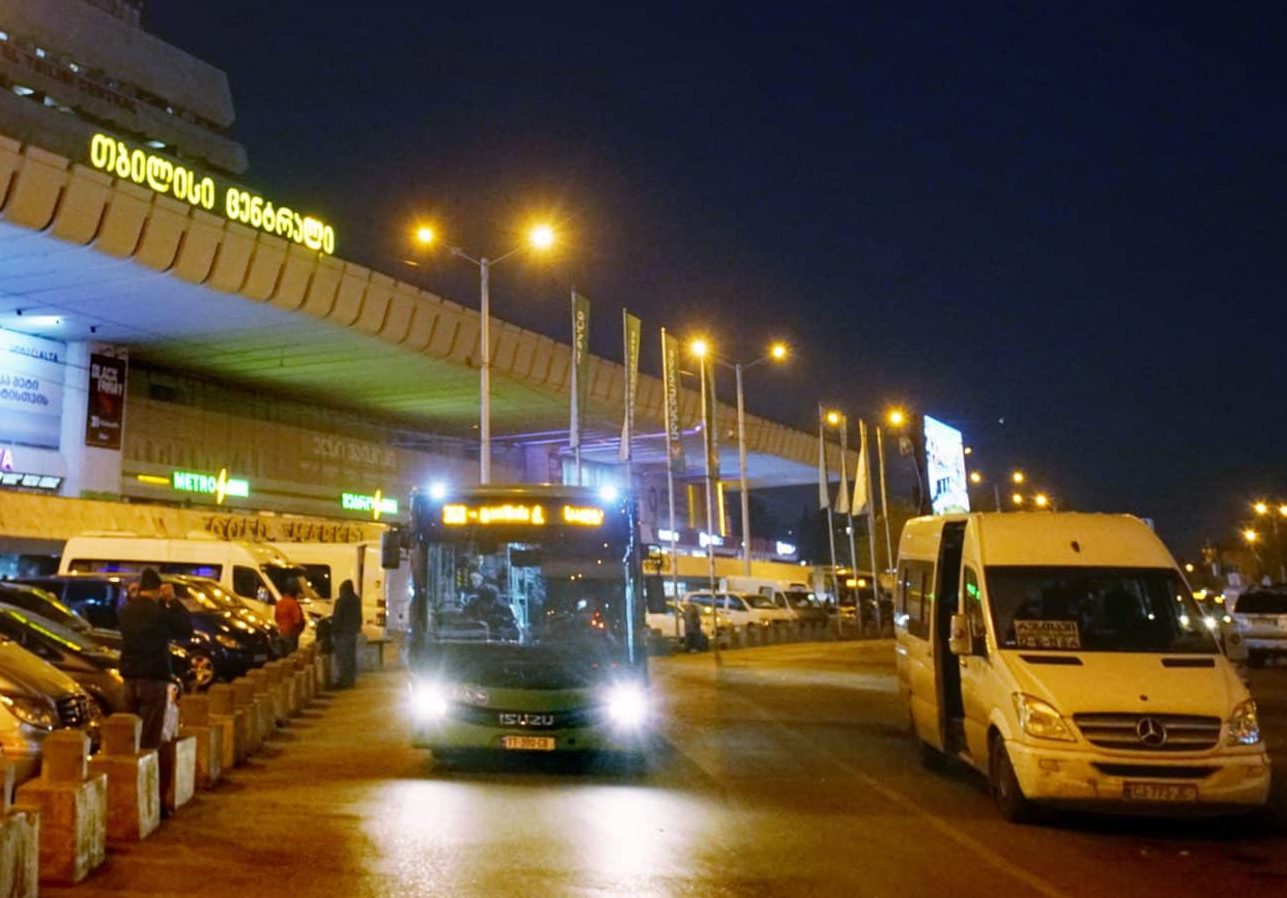
Buses and marshrutki outside Tbilisi Central Railway Station.
Buses work the same pretty much everywhere. You wait a bus stop, pay the fare when you get in, and wait for your stop. If traveling out the city by bus, you will usually need to locate the proper bus station to board.
Marshrutki, however, are special in both their function and etiquette. The word маршрутка is a shortened form of маршрутное такси (“route taxi;” sometimes translated as “shared taxi”). These minivans or minibuses often duplicate routes used by buses, usually displaying the same numbers.
Licensed by the state or city, marshrutki are almost always privately owned. Those traveling out of the city might start at bus stations or elsewhere such as на рынках (at marketplaces).
In some smaller towns marshrutki are самый распространенный общественный транспорт (the most common form of intracity public transport). Although comparable in cost to buses, marshrutki usually run later, arrive more often, navigate traffic jams better, and are faster overall.
Marshrutki only stop if they see more passengers waiting at a stop or when told to stop by a current passenger. One should заранее предупредить водителя (let the driver know in advance), by saying, for example, “После перекрестка остановите“ (“Stop after the intersection”) or simply “На остановке, пожалуйста” (“At the bus stop, please”). This остановка по требованию (stop by request) should be said loudly enough so the driver can hear, but not yelled so as to frighten the driver or other passengers.
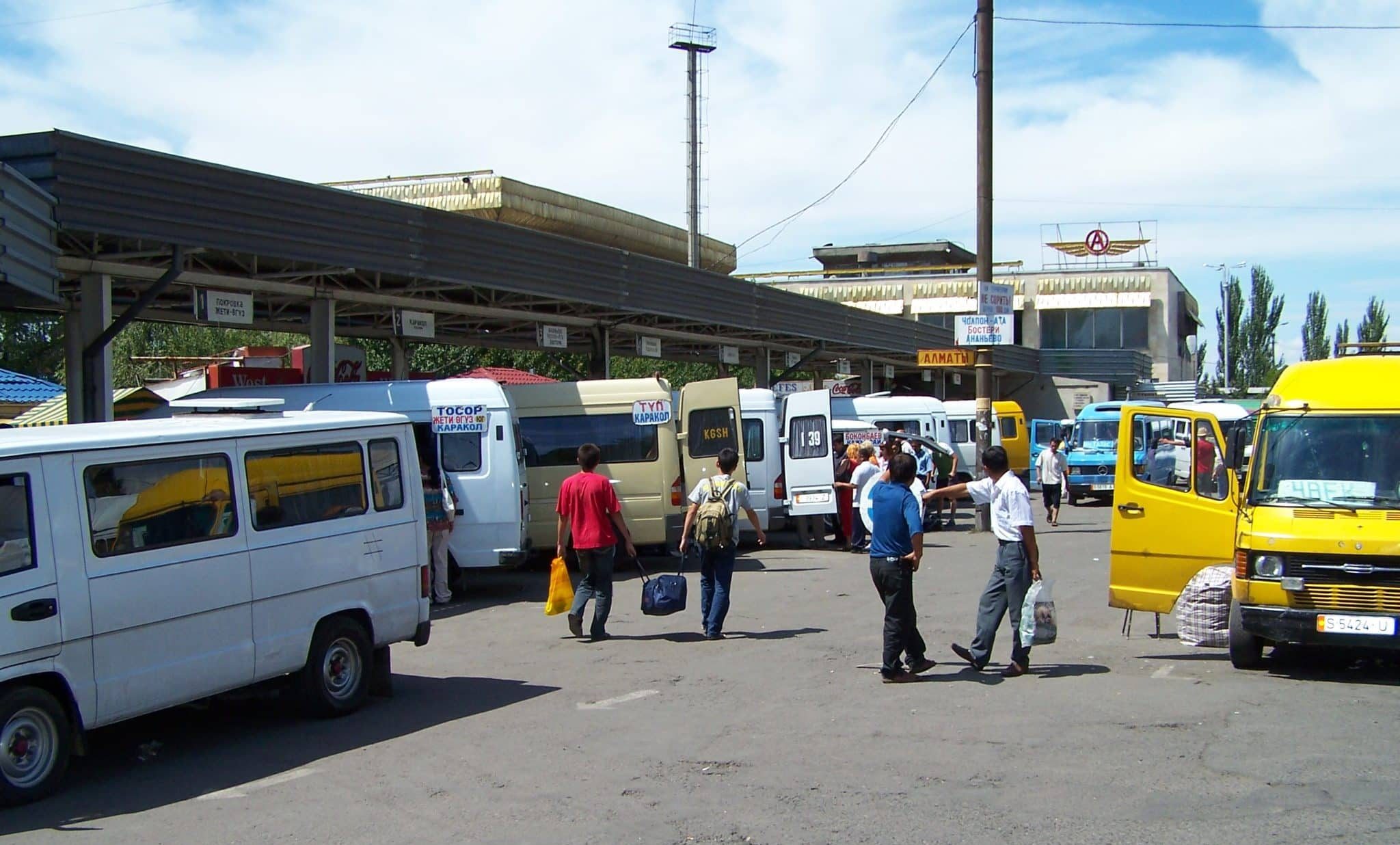
Marshrutki gathered for long distance travel at Bishkek’s bus station.
Most marshrutka routes will appear on map applications. You can also use those same apps to track your progress to know when to ask the driver to stop. You can also ask the driver before getting in, for instance, “До Волгоградского проспекта дом 168, проедет?” (“Will you drive by 168 Volgradsky Prospekt?”) If the answer is affirmative, you can ask “Пожалуйста, остановитесь там.” (“Please stop there”), but should still monitor the route if possible.
Самое важное место (the most important seat) in a marshrutka is right behind the driver. The passenger sitting there will have to (to pass the fare money) передавать деньги за проезд. Sometimes the marshrutka will have a card reader for bank cards or public transport cards, but passing change is still most common in most areas. Other passengers pass their cards or money to the front, saying “Передайте, пожалуйста“ (“Pass (the fare), please”) and sometimes specifying “Передайте за один/два“ (“Pass for one/two (people)”) if they are paying for more than one fare. Sometimes those with large bills might ask for example, “Сдача будет с тысячи?” As a matter of etiquette, passengers should try to travel with small bills when using the marshrutka as the driver can run out of change.
Most marshurtki are equipped with оборудованы поручнями (handrails) to accommodate standing passengers and can get quite crowded. If there are no handrails, the driver may ask you to step out and wait for the next transport.
There are many jokes about водители маршруток (shared taxi drivers) who must have a unique ability to multitask – водят, собирают плату за проезд, и дают сдачу (drive, collect the fare, and give change). They also have a reputation for driving very fast. Be prepared крепко держаться (to hold on tight), especially if standing.
Hotels and Housing in the Former Communist Bloc
In the Communist era, hotels most often были предназначены для обслуживания (were intended to serve) командированные (business travelers) or артисты (artists/actors). In provincial towns, hotels often пустовали (stayed empty). Meanwhile, hotels in bigger cities always had a small sign reading «Мест нет» (“No vacancy”) on the cтойка регистрации (reception desk). For the vast majority of travelers, условия проживания были спартанскими (accommodations were basic) and ужасное обслуживание стало предметом шуток (the horrible service was a source of jokes).
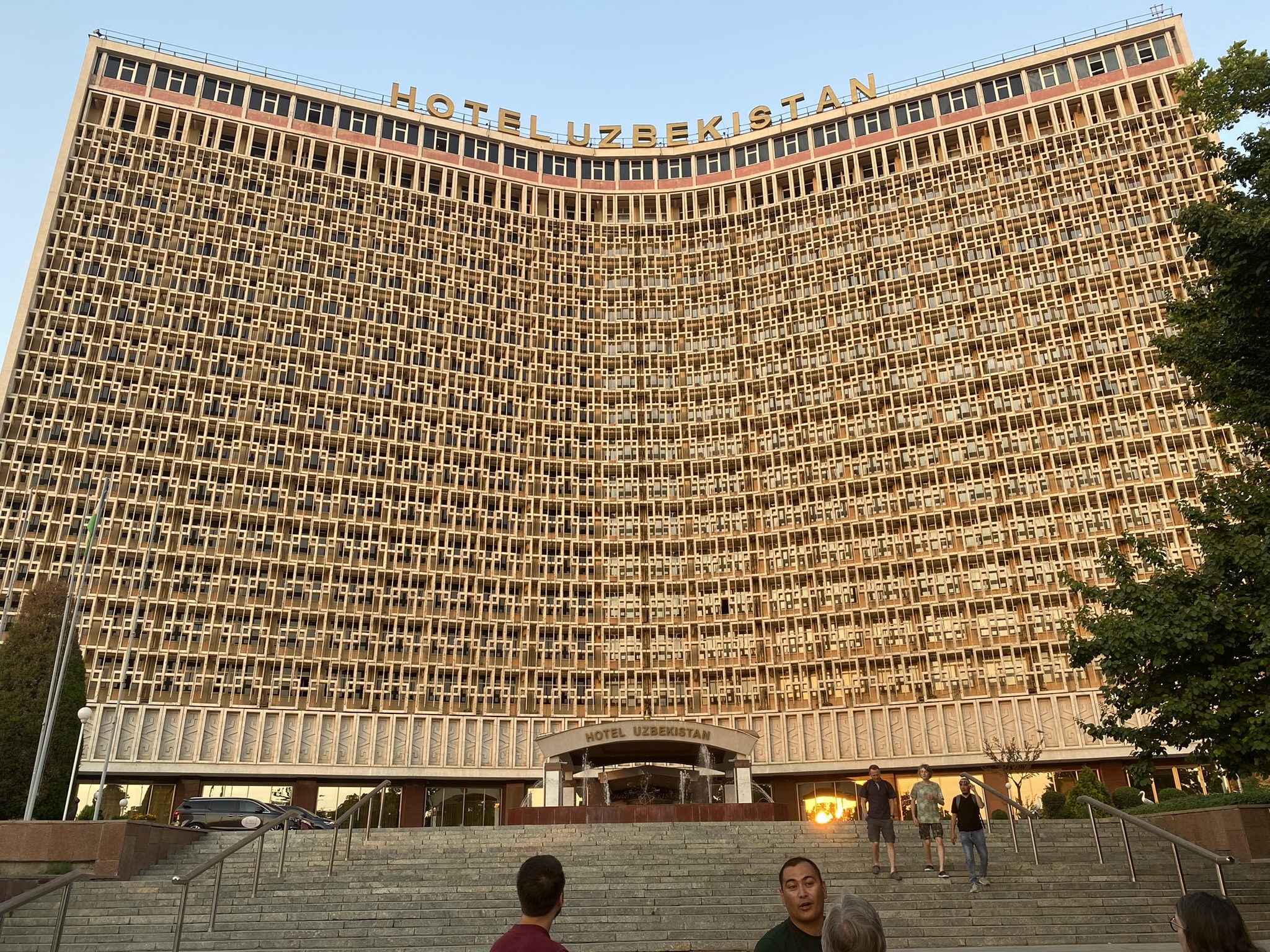
The Hotel Uzbekistan in Tashkent is an example of the flagship hotels built under communism. They were intended mostly for dignitaries and traveling party leaders.
Since the communist era, the hotel landscape across Eurasia has претерпел кардинальные изменения (transformed dramatically). State-run Intourist-style hotels have largely given way to private accommodations, boutique guesthouses, hostels, and international chains, with online platforms making booking easy throughout the region.
Poland and the Baltic states are now fully integrated into the European tourism market, while the Caucasus and Uzbekistan наблюдается туристический бум (are experiencing tourism booms) that continue стимулировать приток инвестиций (to drive investment). Even Kyrgyzstan отмечается рост числа посетителей (has seen rising visitor numbers), though growth there is driven more by экотуризм (ecotourism)—such as hiking, camping, and horse trekking—than by large-scale hotel development.
Services like AirBNB are also now common, although travelers следует с осторожностью относиться к этим вариантам (should be careful of these options), as регистрация визы может быть затруднена (visa registration may be more difficult). If you are on an SRAS program, discuss the situation with one of our representatives. Otherwise, make sure to research the issue and understand what you will need. While hotels generally manage registration for visitors who require it, with individual renters ситуация может быть менее четкой (the situation can be less consistent). One should ask directly “У меня будет регистрация?” (“Will I have registration?”) If they seem confused, tell them the full name of the process: Регистрация иностранных граждан по месту жительства (Registration of a Foreigner at Their Place of Stay).
No matter where one travels in the former Soviet bloc, it is possible to have a safe, enjoyable, and highly educational trip. As with any foreign travel, however, the traveler следует заранее провести необходимую подготовку (should do their homework in advance).
More Russian Lessons

Russian for Wonks: International Relations and Related Issues
In international relations (IR), language is more than a tool. Language, along with culture and history, is central to most national identities. Demonstrating genuine engagement…

Apartments in Russia: 1917 – Present
When the Soviets took over Russia, it was a mostly rural, agricultural country. Most Russians lived in smaller villages and towns in traditional housing units….

Russian for Wonks: Sanctions-Related Russian Vocabulary
Sanctions against Russia have been a complex and ever-changing US-led effort. Some other countries, most prominently the EU, have also enacted sanctions, but there is…

Renting in Russia: Language, Legalities, and Culture
The word for “landlord” in Russian is actually the same as the word for “host” – . Renting in Russia, whether apartments or rooms, comes…

Russian for Wonks: Travel Documents, Infrastructure, and Lingo
Russian remains in wide use across the Eurasian space, although its role varies. Each country has its own language in wide and proud usage. However,…

